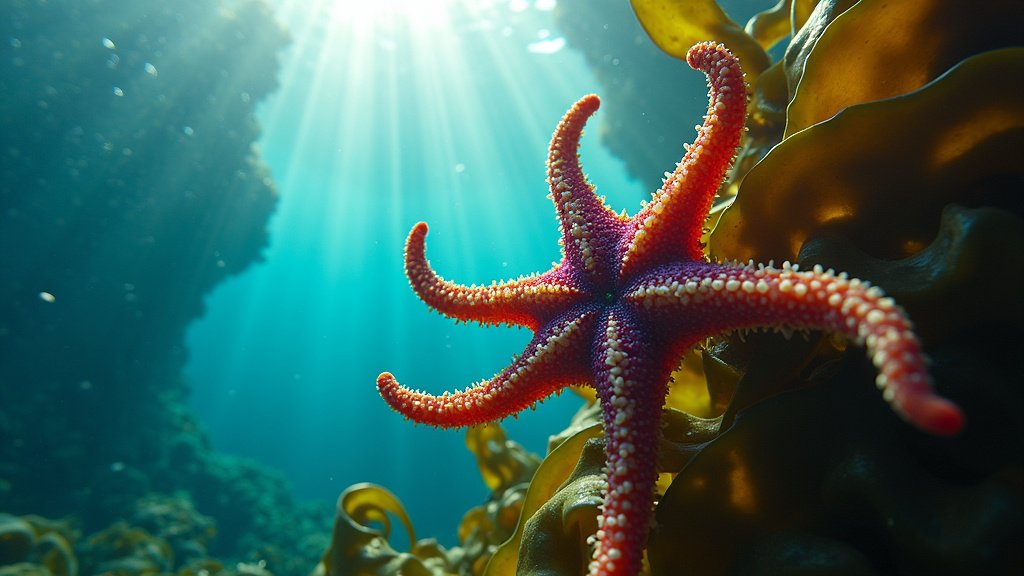
The year 2025 marked a turning point for marine life, with critical successes achieved in the vital effort of Sea Star Recovery. Scientists on the West Coast are working diligently to save endangered sea stars, a population decimated by a devastating disease that threatened the delicate ocean ecosystem balance. This crisis underscored the urgent need for effective Sea Star Recovery strategies.
Understanding Sea Star Wasting Disease and Its Impact
Sea star wasting disease (SSWD) first struck in 2013, sweeping relentlessly along the entire Pacific coast and leading to the demise of billions of sea stars. Many species suffered immense losses, with the sunflower sea star experiencing over 90% mortality, leading to its classification as critically endangered. The disease caused tissues to melt, arms to contort and detach, presenting a grim spectacle of ecological collapse.
The ecological fallout from the loss of these crucial predators was severe. Sea stars are key predators that control sea urchin populations. Without sea stars, urchins exploded in numbers, voraciously devouring kelp forests. These kelp forests are vital marine habitats, providing essential food and shelter for countless species. Their loss impacted the entire west coast marine life, even contributing to food shortages for gray whales. This created a significant domino effect in the ocean’s delicate web of life, highlighting the importance of Sea Star Recovery for overall health.
Scientific Breakthroughs Fueling Sea Star Recovery
However, 2025 brought significant hope with a major scientific breakthroughs in understanding the crisis. An international team of researchers pinpointed the cause of SSWD: a specific strain of bacterium, Vibrio pectenicida. This discovery, published in August 2025, offered a crucial path toward solutions for effective Sea Star Recovery. Understanding the pathogen is fundamental to guiding future management and intervention efforts.
Conservation Efforts and the Path to Recovery
Conservation efforts gained considerable momentum, with the University of Washington leading key initiatives. Friday Harbor Laboratories pioneered captive breeding programs, successfully raising sunflower sea star juveniles. These dedicated efforts, which began years prior, culminated in 2025 with the commencement of reintroduction trials. Divers began releasing captive-bred stars into the wild, and early observations were very promising, indicating that the young stars survived and grew, marking a major step forward in Sea Star Recovery.
Other institutions also contributed greatly to this cause. The Oregon Coast Aquarium developed a treatment program for injured and sick sea stars, proving successful in saving many individuals. Organizations like The Nature Conservancy and other partners advanced breeding science, with labs such as the Sunflower Star Laboratory scaling up efforts for widespread reintroduction. These initiatives are crucial components of comprehensive marine conservation efforts.
Collaborative Science for West Coast Marine Life
These dedicated scientists, working across universities and institutes, are instrumental in advancing knowledge. Key figures like Jason Hodin and Drew Harvell provide vital insights into disease resistance and inform effective Sea Star Recovery strategies. This collaborative spirit is essential, uniting efforts along the entire west coast marine life corridor.
The Ongoing Journey of Sea Star Recovery
The journey toward full Sea Star Recovery is ongoing, and significant challenges remain. Protecting wild populations is vital, and continued research into disease resilience is needed to ensure long-term success for sea star recovery. However, 2025 offers a clear beacon of hope, with evident breakthroughs in both understanding and action. This news provides great promise for marine health and underscores the critical role of science and marine conservation efforts in maintaining ocean ecosystem balance. The future looks more hopeful for sea stars and the ecosystems they inhabit, contributing to the much-needed kelp forest restoration.
These collective efforts aim to restore balance and revive kelp forests, benefiting all marine life and supporting coastal economies. The news from 2025 is inspiring, a testament to dedication and scientific pursuit. It demonstrates the profound impact of focused sea star recovery initiatives on the health of our oceans.