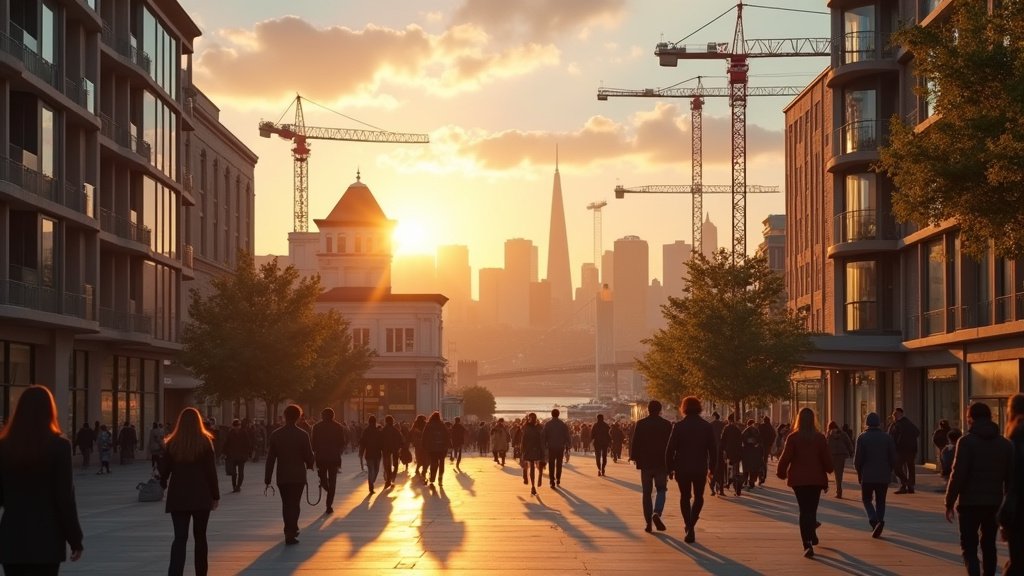
San Francisco, a city long synonymous with innovation and progress, has recently found itself at the forefront of a different kind of urban movement: a determined and practical rebound. Far from merely holding onto abstract ideals, the city by the bay is actively demonstrating a robust commitment to tangible change, a shift that is now capturing the attention of other major urban centers across the West Coast.
For years, discussions about San Francisco often revolved around its unique challenges, from the soaring cost of living to the complex dynamics of its post-pandemic recovery. Yet, a palpable new energy has begun to emerge, signaling a proactive stance that prioritizes measurable outcomes over theoretical discussions. This pragmatic approach is not just a local phenomenon; it represents a significant narrative in the ongoing dialogue about the future of modern American cities, particularly those that form the vibrant spine of the West Coast.
The Shift to Action Over Ideals
The cornerstone of San Francisco’s current resurgence lies in a decisive move from aspirational ideals to concrete action. This pivot is critical. While vision and progressive thinking have always been hallmarks of the city, the current phase is characterized by an emphasis on implementation, practical solutions, and demonstrable progress. It’s a recognition that true revitalization requires more than just good intentions; it demands deliberate, strategic steps that address core issues head-on. This focus on action means evaluating current conditions, identifying specific challenges, and then deploying resources and strategies that yield immediate, visible results.
This new pragmatic spirit permeates various sectors within the city, from public safety initiatives to economic development programs designed to reinvigorate key business districts. It’s about fostering an environment where growth and stability can thrive through concerted effort, moving beyond the often-abstract debates that can hinder progress in complex urban environments. The city’s leaders and community stakeholders are, by all accounts, united in this mission, showcasing a collective will to rebuild and redefine San Francisco’s urban experience.
A West Coast Model in the Making
The compelling story of San Francisco’s rebound is not unfolding in isolation. Across the West Coast, cities facing their own sets of challenges—from economic diversification to enhancing quality of life for residents and visitors—are observing San Francisco’s trajectory with keen interest. The city’s commitment to action over ideals is effectively positioning it as a case study, a potential blueprint for how established metropolises can navigate periods of transition and emerge stronger.
This observation from neighboring cities underscores a shared understanding of the intricate challenges inherent in modern urban landscapes. Whether it’s revitalizing downtown cores, adapting to new work patterns, or attracting new investment, the practical strategies being deployed in San Francisco offer valuable insights. Its progress provides a beacon of hope and a framework for others seeking to initiate their own robust recovery phases. The news of its success travels quickly among the urban planners and civic leaders who frequently look to the Top performing cities for inspiration.
Insights from an Expert Observer
The profound nature of San Francisco’s transformation has been meticulously articulated by those with deep insight into its urban fabric. Alex Bastian, a seasoned freelance writer and, notably, the President and CEO of the Hotel Council of San Francisco, has offered a compelling perspective on this pivotal moment. His analysis, penned in a recent article, illuminates the fundamental shift underpinning the city’s comeback.
Bastian’s dual roles grant him a unique vantage point: as a freelance writer, he possesses the analytical and communicative skills to distill complex urban dynamics into understandable narratives, while his leadership at the Hotel Council places him directly at the nexus of the city’s economic vitality and its hospitality industry—a key indicator of urban health. His observations reinforce the notion that San Francisco’s resurgence is not accidental but the direct result of deliberate, actionable policies and community engagement.
According to Bastian, the city’s focus on tangible outcomes is what truly sets this rebound apart, making it a compelling narrative for cities across the entire West Coast. This emphasis on practical steps, rather than solely on lofty aspirations, provides a concrete model for sustainable urban development. His insights highlight that the spirit of action, rather than an endless pursuit of theoretical perfection, is what is truly driving this transformative period for San Francisco.
Looking Ahead for the West Coast
San Francisco’s journey serves as a powerful reminder that urban resilience is forged through practical application and a willingness to adapt. As this Top-tier West Coast city continues to build on its momentum, its progress will undoubtedly inform and inspire the strategies of other major urban centers. The news of its strategic shift away from ideals and towards a results-oriented approach signals a new era for urban development, not just for California, but for the broader global stage seeking models for dynamic urban recovery.
The comeback is not merely a local success story; it’s a living testament to the power of actionable governance and community collaboration. For those watching from other cities, San Francisco offers not just hope, but a practical demonstration of how sustained effort and a commitment to tangible results can redefine an urban future.