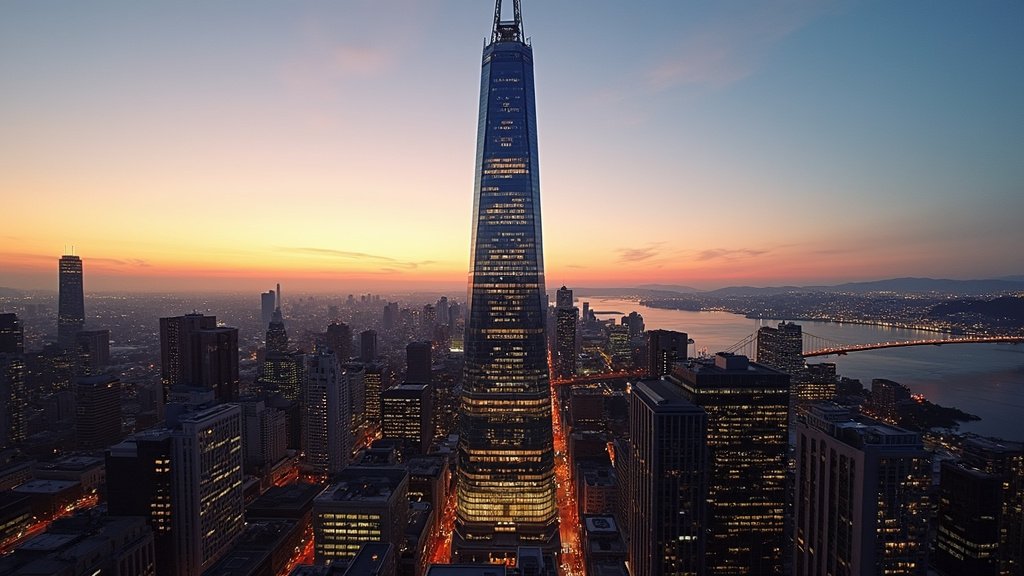
A groundbreaking proposal has been submitted in San Francisco that could redefine the city’s skyline and potentially establish a new benchmark for architectural achievement on the West Coast. The plan outlines the construction of a 1,225-foot-high tower, a structure that, if approved and completed, would ascend to become the tallest building west of the Mississippi River. This ambitious project is slated for the location of the former PG&E headquarters, situated at 77 Beale Street, a site that holds significant historical and geographical importance within the city.
Defining Architectural Heights
The proposed skyscraper is poised to not only dominate the San Francisco skyline but also to claim a prestigious position within the broader context of American architecture. Notably, the building would become the tallest in the United States outside of the established giants of New York and Chicago. This distinction underscores the project’s potential impact, elevating San Francisco’s stature in the realm of supertall architecture. The Council on Tall Buildings and Urban Habitat defines supertall skyscrapers as buildings that soar to heights of 300 meters (approximately 984 feet) or more, a threshold that the proposed tower emphatically surpasses.
The Developer’s Vision
The application for this monumental undertaking was filed by Hines, a prominent real estate investment and development firm headquartered in Houston. Hines has a long history of involvement in large-scale projects, and their expertise in developing and managing complex real estate ventures is well-established. The firm’s decision to pursue this project highlights its confidence in the future of the San Francisco market and its commitment to pushing the boundaries of architectural innovation. The specific details of the design, including the building’s appearance, internal layout, and proposed uses, are likely to be revealed in more detail as the planning process progresses. However, the initial proposal signals a clear intention to create a building that is both visually striking and functionally significant.
Location and Impact
The selection of 77 Beale Street as the site for this ambitious project is strategically significant. The former PG&E headquarters site is located in a central, well-established area of the city, within close proximity to major transportation hubs and essential urban amenities. The construction of a skyscraper of this magnitude could have wide-ranging effects on the surrounding area. It could potentially stimulate further development, attract new businesses and residents, and significantly impact the local economy. Furthermore, the construction process itself would generate a considerable number of jobs, providing a boost to the local workforce. The design and construction will need to address a variety of issues, including seismic safety and environmental sustainability, given the unique challenges that San Francisco presents. The project will undoubtedly undergo rigorous reviews and scrutiny as it navigates the city’s planning and approval processes.
Supertall Construction Trends
As the proposed building would be classified as a supertall skyscraper, this project aligns with a global trend. Cities around the world are increasingly pursuing these iconic structures. The construction of supertall skyscrapers is driven by several factors, including the desire for maximizing land use in dense urban environments, the need for creating high-profile landmarks, and the continuous advancements in engineering and building technologies. Building to such heights is a complex endeavor. Construction often involves specialized materials and innovative techniques, requiring sophisticated management and meticulous planning. The project also offers a tangible demonstration of human ingenuity and its capacity to transform urban landscapes. The project’s progress will be closely watched by architects, engineers, and real estate professionals alike.
Future Considerations
The ultimate fate of the proposed 1,225-foot tower depends on a number of factors, including the city’s review process, market conditions, and any unforeseen challenges. The planning and approval process is expected to be complex and require considerable time. Numerous factors will be considered before a final decision is made. The project will likely be subject to public hearings, environmental impact assessments, and detailed design reviews. The development will also need to address issues such as traffic, public transit, and the preservation of views and sunlight. The approval process will likely involve collaborative work by multiple city departments to guarantee the project is compatible with the needs and standards of the city.