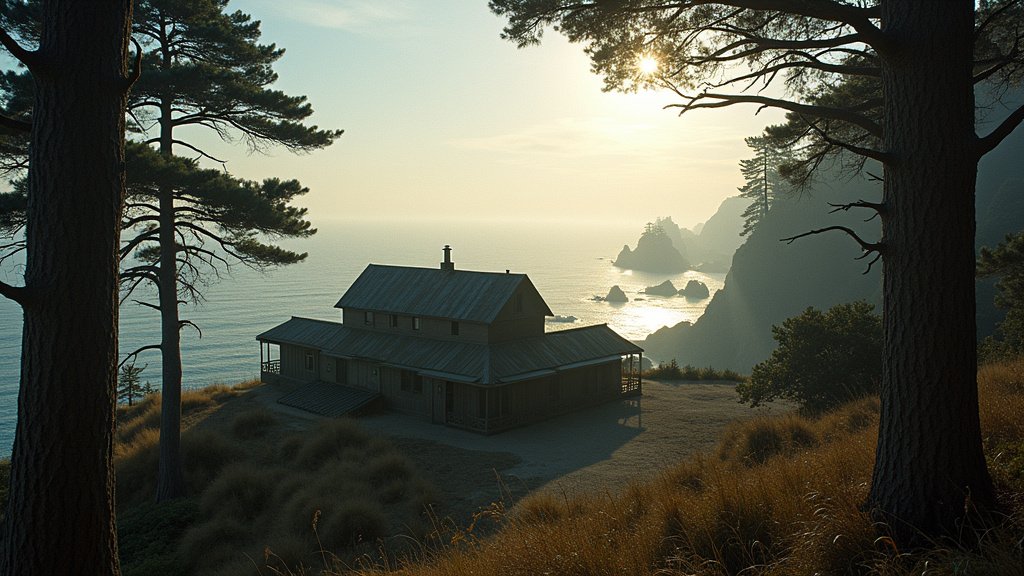
Deep within the majestic redwood forests of Northern California, nestled on a bluff overlooking the vast Pacific, lies a silent sentinel from a bygone era: Station B-71. What appears to be a humble, weather-beaten barn and farmhouse is, in reality, a relic of World War II, a vital component of a covert coastal defense network designed to shield the American West Coast from a feared enemy invasion.
The Shadow of War Descends on the Pacific
The surprise attack on Pearl Harbor on December 7, 1941, shattered America’s sense of security, catapulting the nation into a global conflict. Fear spread like wildfire along the Pacific seaboard, as the unimaginable became a stark possibility: an enemy landing on U.S. soil. This anxiety was amplified by a series of unnerving incidents off the California coast. In the waning days of 1941, the oil tanker SS Emidio became the first U.S. maritime casualty of the war, shelled and ultimately wrecked near Crescent City after an attack by a Japanese submarine. Just weeks later, in February 1942, another Japanese submarine, the I-17, surfaced off Santa Barbara and bombarded the Ellwood Oil Field, marking the first shelling of the North American mainland by an Axis power. These attacks, though inflicting minimal damage, stoked widespread panic and fears of an imminent invasion, prompting an urgent mobilization of defensive measures along the entire West Coast.
Building an Invisible Shield: Radar and Camouflage
In this climate of heightened alert, the U.S. military turned to the nascent technology of radar to create an early warning system. By late 1942, a comprehensive network of radar outposts began to emerge along the coastline, stretching from Mexico to Canada. To ensure these crucial installations remained undetected, a unique camouflage strategy was employed. Instead of overt military structures, these radar stations were ingeniously disguised as innocuous rural homesteads – barns, farmhouses, and other common agricultural buildings. This effort was part of a broader West Coast camouflage initiative, which even enlisted Hollywood set designers to transform aircraft factories and military installations into seemingly peaceful suburban neighborhoods.
Station B-71: A Hidden Watchtower
One such clandestine installation was Station B-71, officially designated “Trinidad,” located on a bluff within the now-famous Redwood National and State Parks. Built in 1942, its primary structures were expertly crafted to resemble a typical farmstead, hiding a sophisticated early warning radar system. The “barn” housed the radar operations, while the “farmhouse” concealed power generation equipment. The station was also equipped with defensive measures, including three .50 caliber anti-aircraft machine guns.
Manned by approximately 35 U.S. Army Air Corps personnel who lived in barracks nearby, Station B-71 operated in near-total isolation. Crews worked around the clock, monitoring radar scopes and maintaining equipment, their vigil against aerial or naval threats a crucial, albeit unheralded, duty. As the northernmost such post in California, it played a vital role in this extensive chain of detection and alert systems that monitored the Pacific approaches.
A Legacy in the Redwoods
As the war progressed and the immediate threat to the mainland diminished, many radar stations were phased out. Station B-71, however, continued its service, being converted to an emergency air-sea rescue radar function in July 1944, and remained operational until the war’s end. After its abandonment, the site reverted to private ownership before eventually becoming part of Redwood National Park. Despite the ravages of time, mudslides, and salvage, the remarkably intact structures of Station B-71 stand today as a tangible reminder of the secret war effort waged along America’s West Coast. This unique piece of history underscores the ingenuity and dedication that characterized the nation’s defense during its most perilous hours, offering a fascinating news glimpse into the hidden architecture of wartime strategy. The site is now preserved and recognized on the National Register of Historic Places, ensuring its story is not forgotten. This remarkable outpost, disguised as a simple farm, served as a silent guardian, a testament to the lengths to which the United States went to protect its shores during World War II.