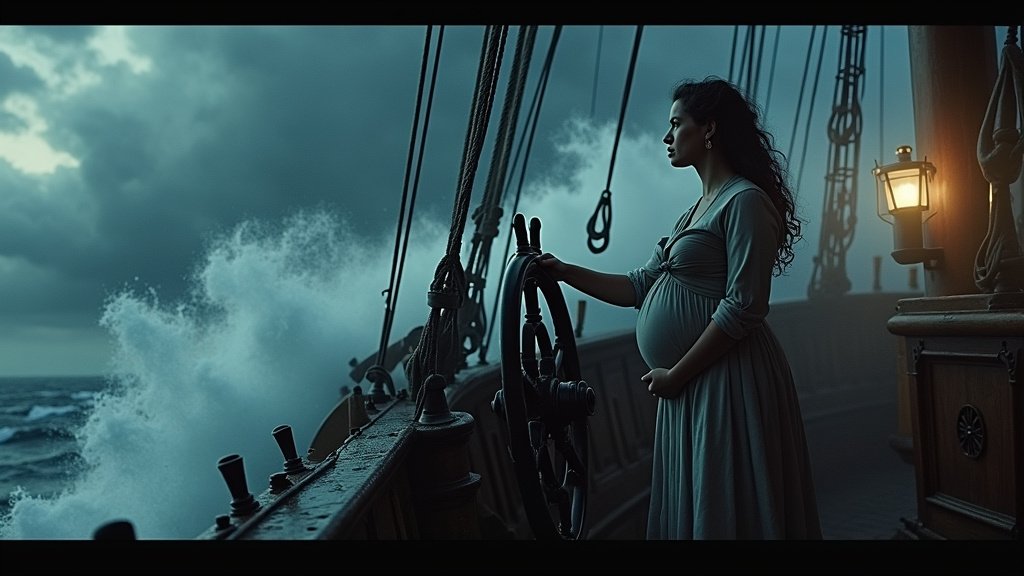
A 19-year-old woman faced incredible odds at sea. She was pregnant. Her husband, the captain, was gravely ill. Mary Ann Patten took command of the Neptune’s Car. This happened in 1856. It was a perilous journey. She sailed towards San Francisco on the West Coast. Her actions became significant maritime news.
The Young Captain’s Predicament
Mary Ann Brown was born in Chelsea, Massachusetts. She came from a seafaring family. At just 16, she married Captain Joshua Adams Patten. He was a young captain. The couple married in 1853. Captain Patten took command of the clipper ship Neptune’s Car in 1855. He was hesitant to leave his wife. The ship’s owners allowed Mary Ann to join him. They sailed from New York. Their voyages took them to places like San Francisco, China, and London. In 1856, they set sail again. This time, Mary Ann was pregnant. The Neptune’s Car was a fast ship. It was built for speed. Clippers like this were vital. They connected the East and West Coast trade routes. The California Gold Rush fueled demand. Speed meant profit for investors. However, the ship had a troubled past. On its maiden voyage, 23 crew members mutinied. This history added to the tension.
Facing the Mutiny and the Storm
The voyage in 1856 proved far more challenging. Captain Patten became gravely ill. He suffered from what was called “brain fever.” He collapsed and fell into a coma. The first mate proved untrustworthy. He was even accused of insubordination. Some accounts suggest he was plotting mutiny. Mary Ann had studied navigation. She had learned from her husband and ship’s library. She decided she must take charge. She assumed command of the ship. The ship was sailing near Cape Horn. This is a notoriously dangerous area. Treacherous waters and severe storms are common. Icebergs also posed a significant threat. For 56 days, Mary Ann navigated the vessel. She managed the crew. She also cared for her sick husband. She successfully put down the mutiny. She steered the ship through violent seas. Her resolve was tested constantly. She faced the fury of the elements. She ensured the ship’s safety.
Arrival and Legacy
Mary Ann Patten guided the Neptune’s Car to San Francisco. She arrived on November 15, 1856. The journey took about ten weeks. Her cargo was intact. Her crew was safe. She had become the first woman to command an American merchant vessel. This was a remarkable achievement. Newspapers around the world reported the news. She was an instant celebrity. Many lauded her courage. Some newspapers highlighted her role in keeping her husband alive. The ship’s insurers sent her a reward. It was $1,000 and a note of thanks. A month after docking, she gave birth. She delivered her only child, a son. Mary Ann Patten’s story became legend. It was a tale of bravery and duty. She proved women could handle extreme challenges. Her feat entered seafaring lore. It stands as a top maritime accomplishment.
A Remarkable Feat
Mary Ann Patten’s story is extraordinary. She was a young teenager. She was pregnant. She faced illness, mutiny, and storms. She took on the top command of a clipper ship. Her journey secured her place in history. The Neptune’s Car completed its voyage. This news resonated widely. Her actions defied societal norms of the era. Women were often confined to domestic roles. Mary Ann Patten sailed into the unknown. She navigated the treacherous waters of the West. Her determination was paramount. It ensured the safe arrival of ship and crew. Her legacy endures. It inspires many today.