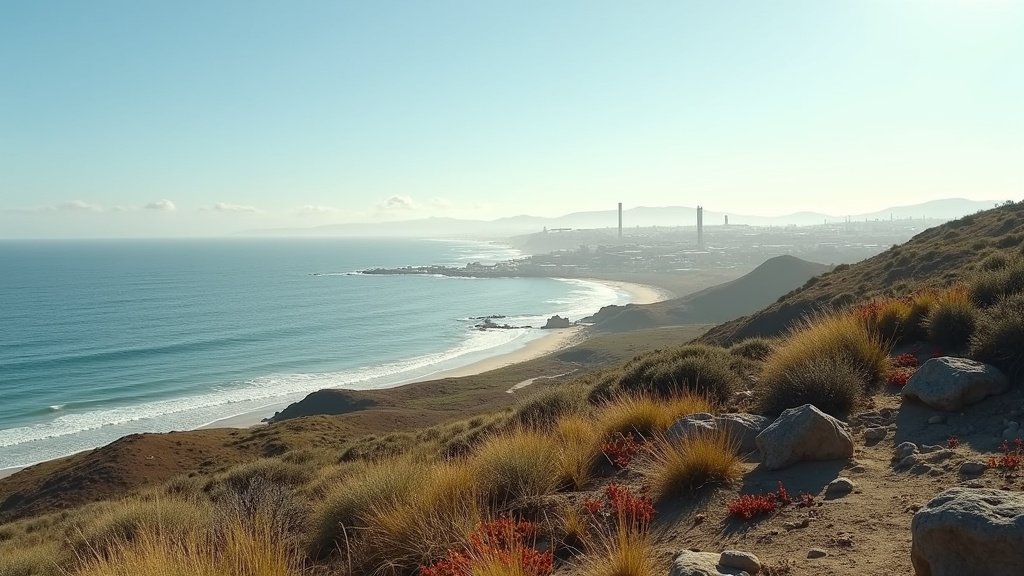
Marine Corps Base Camp Pendleton, a sprawling 125,000-acre expanse on the Southern California coast, long considered an irreplaceable oasis from relentless urban sprawl, is now under consideration by the Department of Defense (DoD) for unprecedented commercial development or lease. This potential shift marks a significant departure from the base’s 83-year history, during which its 17 miles of coastline and interior terrain have been exclusively dedicated to military training and operations.
A Coastal Sanctuary Under Scrutiny
Established in 1942, Camp Pendleton has evolved into the major West Coast hub for the U.S. Marine Corps, serving as a critical training ground for amphibious assaults and expeditionary warfare for generations of service members. Its immense size and strategic location between Los Angeles and San Diego have preserved it as the largest undeveloped stretch of coastline in Southern California, a critical ecological buffer against the region’s characteristic urban expansion.
Beyond its military significance, Camp Pendleton is a biodiversity hotspot, playing a crucial role in conservation efforts. The base has been recognized by the U.S. Fish and Wildlife Service as a conservation partner of the year for its work in protecting endangered species, including the tidewater goby, coastal California gnatcatcher, arroyo toad, and southern California steelhead. Its diverse ecosystems, from coastal dunes to riparian woodlands, provide vital habitats for numerous threatened and rare species that have been displaced elsewhere. Experts, such as Bill Fulton, a professor at UC San Diego, have highlighted its unique value as a significant open space along the coast.
Considering Commercial Leases: The Pentagon’s Proposal
Recent news indicates that the Department of Defense is exploring “commercial leasing opportunities” on portions of Camp Pendleton. Navy Secretary John Phelan reportedly conducted an aerial tour and held “initial conversations” regarding these possibilities during a visit to the base. A spokesperson for the Navy stated that “these opportunities are being evaluated to maximize value and taxpayer dollars while maintaining mission readiness and security,” emphasizing that “no decisions have been made and further discussions are needed”.
While specific details about the type and extent of proposed development remain unclear, some reports suggest that the proceeds from such leases could be directed towards ambitious defense initiatives, such as President Trump’s “Golden Dome” missile defense project. This approach aligns with a broader strategy by the administration to identify and leverage federal lands as potential revenue sources.
Balancing Mission, Environment, and Funding
The prospect of commercial development on Camp Pendleton raises significant questions about balancing national security needs with environmental stewardship. The base has a documented history of proactive environmental management, working with various agencies to restore habitats and protect wildlife. However, Camp Pendleton also faces environmental challenges, including its designation as a Superfund site due to past contamination from military activities, such as firefighting foam (PFAS) and solvents, impacting groundwater and soil.
Past attempts at development on or adjacent to the base have met public and regulatory resistance. For instance, a mid-1990s proposal for housing at San Mateo Point near Trestles Beach was rejected by the California Coastal Commission. The current discussions also occur within a broader context of development pressures on California’s coast and concerns over the long-term viability of natural habitats amidst ongoing military operations and potential new commercial uses.
A Crossroads for the West Coast’s Last Coastal Wilderness
As the Department of Defense deliberates on these “unprecedented” options, the decision carries profound implications for one of Southern California’s most ecologically vital and historically significant landscapes. The debate underscores the complex challenges of managing vast military installations that also serve as de facto wildlife refuges. The news from Camp Pendleton highlights a critical juncture where fiscal imperatives, national defense priorities, and the preservation of a unique natural heritage on the West Coast must be carefully weighed. The lack of concrete plans leaves many stakeholders uncertain about the future of this critical coastal territory, underscoring the need for transparency as these discussions evolve.