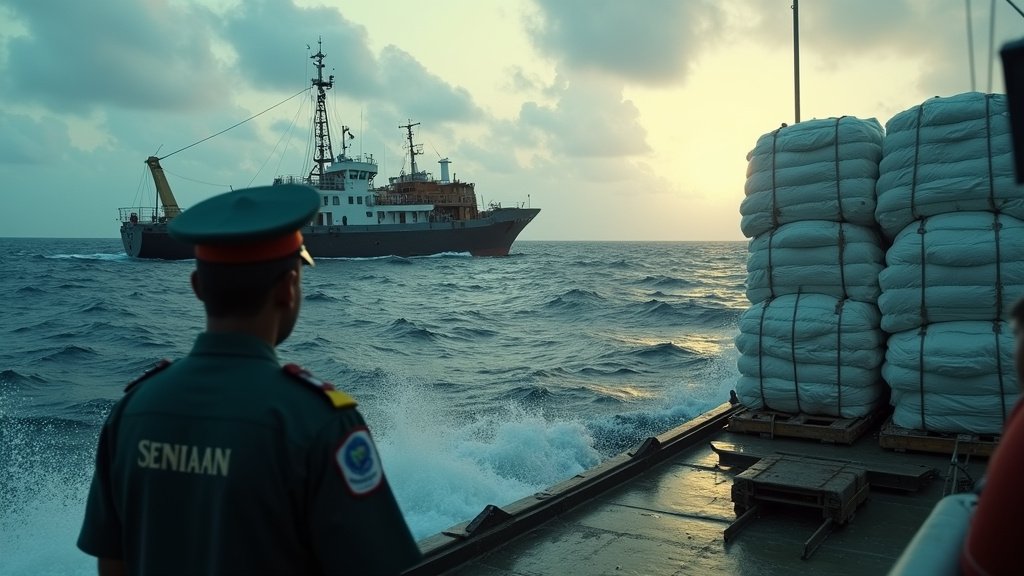
In a significant development for drug interdiction efforts, Panamanian authorities announced Tuesday the monumental **Panama Cocaine Seizure** of approximately 13.2 tons of cocaine aboard a ferry in the Pacific Ocean, destined for the United States. The massive haul, one of the largest in the nation’s history, resulted in the arrest of 10 individuals and underscores Panama’s critical role as a transit point for illicit narcotics, making this Panama Cocaine Seizure a noteworthy event. The operation, which took place on Monday, November 10, 2025, intercepted a vessel carrying an estimated 11,562 packages of cocaine, contributing to the ongoing fight against cocaine trafficking.
Historic Panama Cocaine Seizure in Panamanian Waters
Panama’s National Aeronaval Service (SENAN) led the operation that intercepted the ferry, which was attempting to evade authorities in the Pacific waters near San José Island. Prosecutor Julio Villareal confirmed that the confiscated substance was cocaine and stated the seizure represents a significant blow to international criminal networks. The value of the seized drugs is estimated to be over $200 million USD. This operation is being hailed as a historic achievement, with some reports noting it as the largest seizure in Panamanian waters since 2007 or 2008, adding another significant Panama Cocaine Seizure to the record books.
Cocaine Trafficking: Originating from Colombia, Destined for U.S. Market
Intelligence indicates that the seized cocaine originated from Colombia, specifically from the Juradó and Buenaventura regions, which are known hubs for drug production and transit. The vessel was reportedly en route to Mexico, with the ultimate destination being the United States, the world’s largest consumer of cocaine. The Pacific route is increasingly favored by drug traffickers for shipments from South America to North America, highlighting the persistent challenge of cocaine trafficking despite efforts like the recent Panama Cocaine Seizure.
International Arrests and Diverse Nationalities in Panama Cocaine Seizure Operation
Among the 10 individuals arrested during the operation were nationals from Venezuela, Ecuador, Nicaragua, and Colombia. This diversity in nationalities highlights the international scope of the drug trafficking organizations operating in the region, a common thread in large-scale Panama Cocaine Seizure events.
Broader Context: Heightened Anti-Drug Efforts and Regional Tensions Surrounding Panama Cocaine Seizure
This major seizure occurs amid an intensified anti-drug military deployment in Latin America by the United States. U.S. forces have been conducting airstrikes on alleged drug-ferrying boats in both the Caribbean and the Pacific, operations that have led to significant casualties, with at least 76 reported deaths. While Washington asserts these actions are part of a campaign against maritime drug trafficking and “narco-terrorism,” countries like Venezuela have voiced concerns, viewing the operations as a potential pretext for political interference. The U.S. Coast Guard also reported record cocaine seizures in Fiscal Year 2025, underscoring the persistent flow of narcotics and the importance of drug interdiction efforts like the recent Panama Cocaine Seizure.
Panama’s Unwavering Battle Against Narcotics: A Record Panama Cocaine Seizure
Panama has long served as a vital corridor for drugs trafficked from South America to North American markets, as well as Europe. The country seized approximately 119 metric tons of drugs in 2023 and over 80 tons in 2024. The consistent large-scale seizures demonstrate the ongoing challenge and Panama’s sustained commitment to combating illicit trafficking along its extensive coastline. This latest bust, the significant Panama Cocaine Seizure occurring on the West Coast of Panama, reaffirms the nation’s frontline role in global drug interdiction efforts, a crucial piece of news for international law enforcement agencies aiming to disrupt the U.S. drug market through comprehensive drug interdiction.