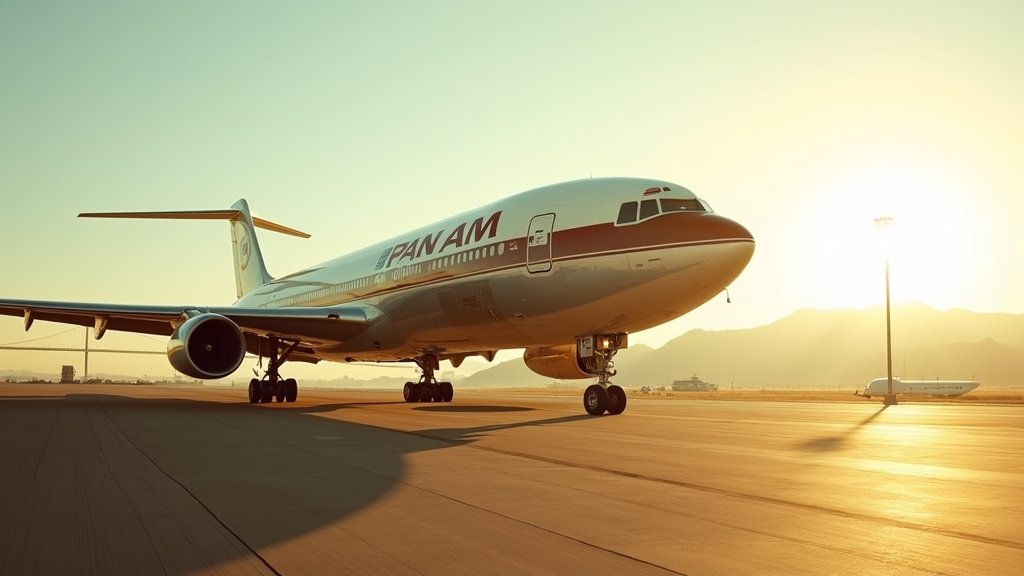
The roar of jet engines changed travel forever, and for Hawaii, it meant a new era of Pan Am Hawaii Flights. Pan American World Airways, or Pan Am, pioneered a transformative route, the San Francisco to Hawaii flight, beginning a revolution in travel. The west coast became a gateway, making Pan Am Hawaii Flights a crucial link.
Pan Am Hawaii Flights: A New Era Dawns
For centuries, Hawaii was remote, and reaching the islands meant long sea voyages that took days or weeks, accessible only to the wealthy. Steamships like Matson Line offered passage, but travel was slow and costly. The journey was an adventure itself, with stories of Hawaii spreading through writings by Mark Twain and Jack London, building desire for visits. Early hotels like the Moana appeared, and tourism was a trickle, not a flood, until the advent of Pan Am Hawaii Flights.
Pan Am’s Flying Clippers: Early Pan Am Hawaii Flights
Pan Am began its pioneering flights in the 1930s, and Juan Trippe, the airline’s founder, had big dreams for Pan Am Hawaii Flights. He envisioned trans-Pacific travel, and the first successful flight to Hawaii was in 1935, using a Martin M-130 flying boat known as the “China Clipper” service. Passenger service started in 1936. Tickets were expensive, costing over $4,700 in today’s money, yet thousands applied for the few seats available. Hawaii was no longer just a dream but becoming a destination thanks to these early Pan Am Hawaii Flights. These flying boats offered luxury with fine dining and lounge cabins.
The Jet Age Arrives for Pan Am Hawaii Flights
World War II significantly changed aviation, advancing technology rapidly. After the war, flying boats became obsolete, and land-based aircraft took over. Pan Am replaced its Clippers, and the Boeing 377 Stratocruiser began service in 1949, dropping flight times to about nine hours. However, the biggest change for Pan Am Hawaii Flights was yet to come, as the 1950s saw incredible innovation, and the jet age truly began.
The Jet Transformation of Pan Am Hawaii Flights
In 1959, everything changed for Pan Am Hawaii Flights. The first Boeing 707 jetliner flew to Honolulu, initiated by Qantas, with Pan Am soon following. United Airlines joined in 1962. Jet aircraft dramatically cut travel times for Pan Am Hawaii Flights, with journeys from the West Coast to Hawaii taking less than five hours – a huge reduction and much faster than previous propeller planes. Fares also dropped significantly, making travel affordable for more people and unlocking Hawaii as a destination, no longer just for the rich.
Mass Tourism Takes Hold: The Impact of Pan Am Hawaii Flights
The jet age, greatly propelled by services like Pan Am Hawaii Flights, unlocked Hawaii. Millions of new visitors arrived, sparking a tourism boom. Hotels and resorts were built rapidly, transforming Waikiki and leading to the appearance of large resorts on other islands. This created many new jobs, and tourism became Hawaii’s leading industry, contributing about 20-25% of the state’s GDP. However, this rapid growth fueled by Pan Am Hawaii Flights and subsequent jet age travel had consequences, creating an economy heavily reliant on tourism and an over-reliance.
Unforeseen Impacts of Pan Am Hawaii Flights
The influx of visitors brought by services like Pan Am Hawaii Flights presented challenges. The cost of living rose for residents, and natural resources faced strain. Water sources became pressured, and the environment suffered degradation, with fragile ecosystems damaged. Popular spots like Hanauma Bay saw impacts, and visitors’ behavior sometimes caused problems, leading to concerns about cultural exploitation and pressure on indigenous culture. The islands’ unique lifestyle was altered, and the news of tourism’s dual impact became a growing concern following the era of Pan Am Hawaii Flights.
A Lasting Legacy of Pan Am Hawaii Flights
Pan Am’s San Francisco to Hawaii route, offering vital Pan Am Hawaii Flights, was pivotal in opening the islands to the world. The jet age, significantly advanced by these Pan Am Hawaii Flights, made Hawaii a dream destination, bringing economic prosperity alongside significant challenges. The trending shift towards mass tourism, facilitated by early Pan Am Hawaii Flights and subsequent advancements, reshaped Hawaii, leaving a complex legacy. This historical event, marked by the ease of Pan Am Hawaii Flights, continues to shape the islands. The west coast remains a key connection point, the allure of Hawaii continues, and this travel boom redefined island life, all significantly influenced by the pioneering spirit of Pan Am Hawaii Flights.