US Launches ‘Operation Southern Spear’: A Militarized Push Against ‘Narco-Terrorists’ in the Western Hemisphere Amid Rising Tensions
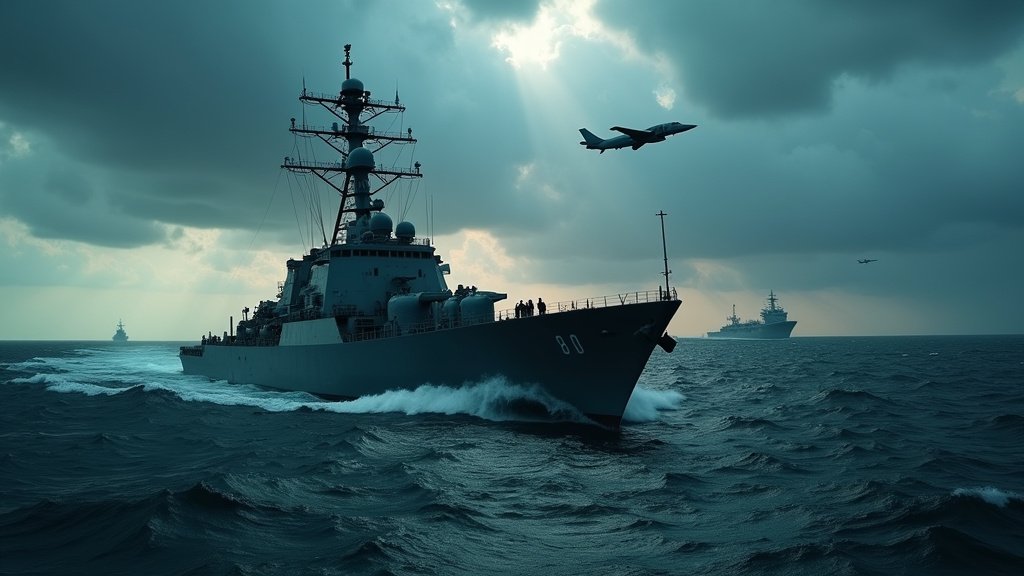
The United States has initiated a significant escalation of its military posture in the Western Hemisphere, unveiling “Operation Southern Spear”—a comprehensive campaign explicitly targeting groups designated as “narco-terrorists.” This operation, announced by Defense Secretary Pete Hegseth, marks a notable shift towards a more aggressive and technologically advanced military approach, deploying advanced robotic fleets and substantial naval assets to combat drug trafficking US networks across the region. The initiative prioritizes direct military action and surveillance, diverging from any perceived trend toward de-escalation or a solely diplomatic strategy, and has already generated international concern regarding US militarization.
The New Offensive: Understanding Operation Southern Spear
Operation Southern Spear, led by Joint Task Force Southern Spear and U.S. Southern Command (SOUTHCOM), is designed to “defend our Homeland, remove narco-terrorists from our Hemisphere, and secure our Homeland from the drugs that are killing our people,” according to Hegseth’s public statements. The campaign involves an unprecedented mix of robotic air and sea vessels, including long-dwell robotic surface vessels, high-speed interceptor boats, and vertical take-off and landing robotic aircraft. These systems are integrated with traditional naval forces, such as the USS Gerald R. Ford aircraft carrier strike group, and U.S. Coast Guard cutters. The objective is to enhance the U.S. capacity to detect, monitor, and disrupt illicit activities, particularly maritime narcotics networks operating in the Caribbean Sea and the eastern Pacific Ocean. This expansion of US counter-narcotics efforts is central to Operation Southern Spear.
This operation builds upon a series of U.S. military strikes that began in September, targeting approximately 20 vessels in international waters, resulting in the deaths of at least 76 individuals, according to Pentagon figures. These actions have been framed by the administration as necessary measures against “narco-terrorists,” a designation the Trump administration has applied to drug cartels and related criminal organizations, viewing them as a direct national security threat akin to international terrorist groups. The scope of Operation Southern Spear is unprecedented.
The ‘Narco-Terrorist’ Framework and Shifting Strategy of Operation Southern Spear
The intensified focus on “narco-terrorism” signals a deliberate reclassification of drug cartels, moving them from purely criminal organizations to threats requiring a military response. This framing grants broader authorities for engagement and enables the use of military force, aligning with President Trump’s directive to treat these groups with the same severity as global terrorist organizations. This militarized approach has historical precedents in the U.S. “War on Drugs” that began decades ago, with operations like Plan Colombia and the Mérida Initiative often criticized for their heavy reliance on military aid and their limited success in eradicating drug production or trafficking, while contributing to violence and instability. Operation Southern Spear represents a contemporary evolution of this strategy.
Geopolitical Tensions and Regional Concerns Surrounding Operation Southern Spear
The aggressive stance of Operation Southern Spear has not been without significant international repercussions. Several nations, including the United Kingdom and Colombia, have reportedly ceased sharing drug intelligence with Washington, citing concerns over the legality and human rights implications of the U.S. strikes. Venezuela has vehemently denounced the operations, accusing the United States of violating its sovereignty and employing the “war on drugs” narrative as a pretext for regime change. Regional leaders and analysts express unease over the potential for escalating conflict and the impact on regional stability, questioning whether a militarized approach truly addresses the complex roots of drug trafficking or merely shifts its dynamics. The reliance on military force, particularly against vessels in international waters without clear evidence of their cargo or passengers’ intent, has drawn criticism for potentially violating international law and human rights, a key point of contention surrounding Operation Southern Spear.
Effectiveness and Underlying Objectives Debated in Operation Southern Spear
While the stated goal of Operation Southern Spear is to disrupt drug flows and protect the U.S. homeland, many experts and regional observers question its long-term effectiveness. The “balloon effect”—where interdiction in one area merely pushes trafficking to another—is a well-documented challenge in drug control efforts targeting drug trafficking US. Furthermore, the robust military deployment, including the presence of a U.S. aircraft carrier strike group in the Caribbean and the explicit targeting of Venezuela, has fueled speculation that regime change in Caracas is a significant underlying objective. U.S. officials have acknowledged considering strikes on land targets in Venezuela, a prospect that has heightened geopolitical tensions. The administration’s framing of drug cartels as “narco-terrorists” and its focus on countries like Venezuela, which it accuses of facilitating drug transit, suggests a strategy intertwined with broader foreign policy aims in the West. Operation Southern Spear is thus viewed through multiple lenses.
Conclusion
Operation Southern Spear signifies a pronounced shift in U.S. counter-narcotics strategy in the Western Hemisphere, leaning heavily on military power and advanced technology to combat narco-terrorists Western Hemisphere. This aggressive posture, while aimed at combating alleged “narco-terrorists” and protecting U.S. interests, has ignited diplomatic friction and raised critical questions about its effectiveness and broader geopolitical implications. As the U.S. deepens its military involvement, the long-term consequences for regional stability, international cooperation, and the ultimate disruption of the drug trade remain subjects of intense scrutiny, underscoring the complex challenges of the ongoing drug war in the Americas. The news from the West coast of increasing militarization stands in stark contrast to any hypothetical de-escalation, highlighting a potent geopolitical narrative unfolding in the region, with Operation Southern Spear at its center.