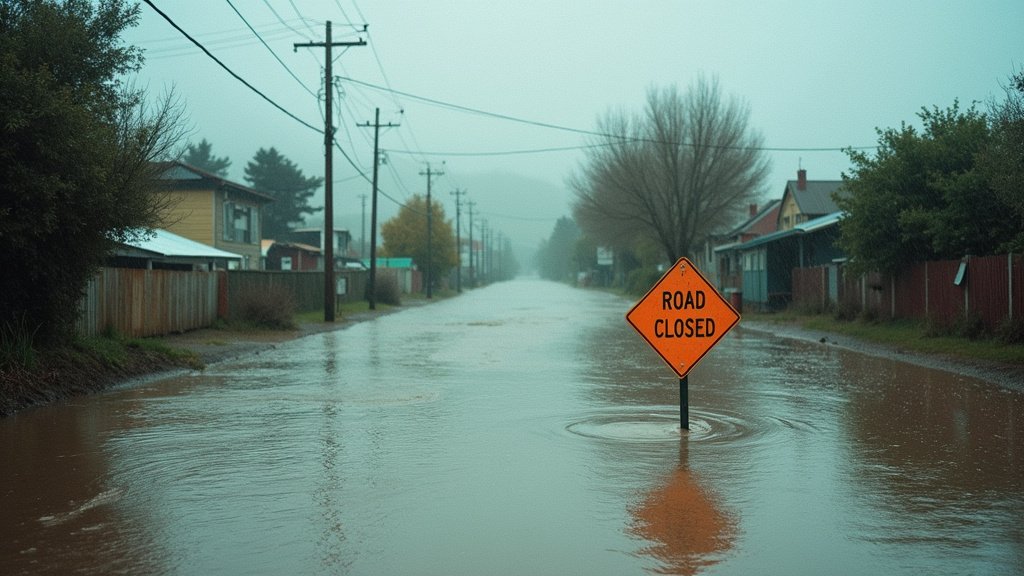
New Zealand Flooding has caused widespread devastation across the North Island. This severe weather event brought torrential rain, leading to extensive flooding, mandatory evacuations, and isolation for several towns. A man has been reported missing after a dangerous river crossing, highlighting the perilous conditions residents are facing. Authorities have issued urgent weather warnings as the situation unfolds.
Man Missing Amidst New Zealand Flooding
A man was tragically swept away near Warkworth during a perilous river crossing. His vehicle was overtaken by a raging river, a stark example of the dangers posed by the intense New Zealand Flooding. Fortunately, another passenger managed to escape and quickly raised the alarm, prompting an immediate search operation by the police. This incident underscores the grave risks associated with floodwaters during such extreme weather events.
Widespread Evacuations and Emergencies Due to New Zealand Flooding
Local councils have urged residents to act swiftly as floodwaters rise. Many people in flood-prone areas have moved to higher ground, with others preparing for imminent evacuations. Several districts have declared states of local emergency, including Whangārei, Thames-Coromandel, and Hauraki District. The Bay of Plenty and Tairāwhiti regions have also been heavily impacted by the New Zealand Flooding. These emergency declarations, issued as precautionary measures, are providing communities with crucial time to seek safety from the relentless downpours.
Impact on Infrastructure and Communities from North Island Floods
The North Island floods have rendered numerous roads impassable, with landslides blocking essential highways. State Highway 25 faced significant closures, effectively cutting off the popular tourist town of Whitianga from both north and south access. Farmland lies submerged under deep water, and many homes are surrounded by rising floodwaters. The Coromandel Peninsula, in particular, has experienced intense rainfall, with some areas receiving a month’s worth of average rain in just 12 hours. Wastewater systems in Whangārei are nearing capacity, prompting requests for residents to reduce water consumption. This severe weather event significantly impacts daily life, and the eventual cost of the damage from the New Zealand Flooding is expected to be substantial.
The Torrential Rain and Severe Weather System
A tropical low has fueled this severe weather event, drawing an extremely moist air mass from the tropics. MetService issued red heavy rain warnings, the highest alert level, signifying a significant threat to life. Dangerous river conditions and flash floods were anticipated, along with substantial flooding and hazardous landslides. Parts of Northland have already seen over 300 mm of rain, while the Coromandel Peninsula received 150-200 mm in 24 hours. The Bay of Plenty could experience an additional 240 mm, and Gisborne faces the potential for 250-350 mm of rain. These periods of intense downpours are a key feature of the current New Zealand Flooding.
Official Response and Urgent Weather Warnings
Emergency services have issued stern warnings to the public, emphasizing the extreme risks posed by fast-moving water and unstable ground. Emergency Management Minister Mark Mitchell has expressed deep concern, identifying Northland as a key focus area. He noted that the ground was already saturated from prior rain, meaning more rain would quickly exacerbate hazardous conditions. Civil Defence is urging all residents to be prepared and to create an evacuation plan in advance. Authorities stress avoiding all non-essential travel and exercising extreme caution when driving. Always check road conditions before any journey, and if your life or property is in danger due to the New Zealand Flooding, call 111 immediately.
Broader Context and Climate Change Impacts
New Zealand is facing increasing pressure on its infrastructure due to more frequent extreme rainfall events, which scientists widely link to global warming. This severe weather event is now a prominent topic in discussions surrounding climate change impacts. Impacts on the west coast of the South Island were also being monitored, with heavy rain watches in effect. The nation now braces for further disruption. This urgent news highlights the national vulnerability to extreme weather patterns exacerbated by climate change, a critical factor in understanding the current New Zealand Flooding.
Conclusion on New Zealand Flooding
The severe flooding has caused widespread disruption across the island. The search for the man missing continued into the night as authorities worked tirelessly to manage the ongoing crisis. Residents are urged to remain vigilant and follow all safety advice provided by emergency services. Preparedness remains the most critical factor for personal safety during events like this severe New Zealand Flooding. This event serves as a stark reminder that extreme weather demands constant attention and adaptation, especially in light of intensifying climate change impacts.