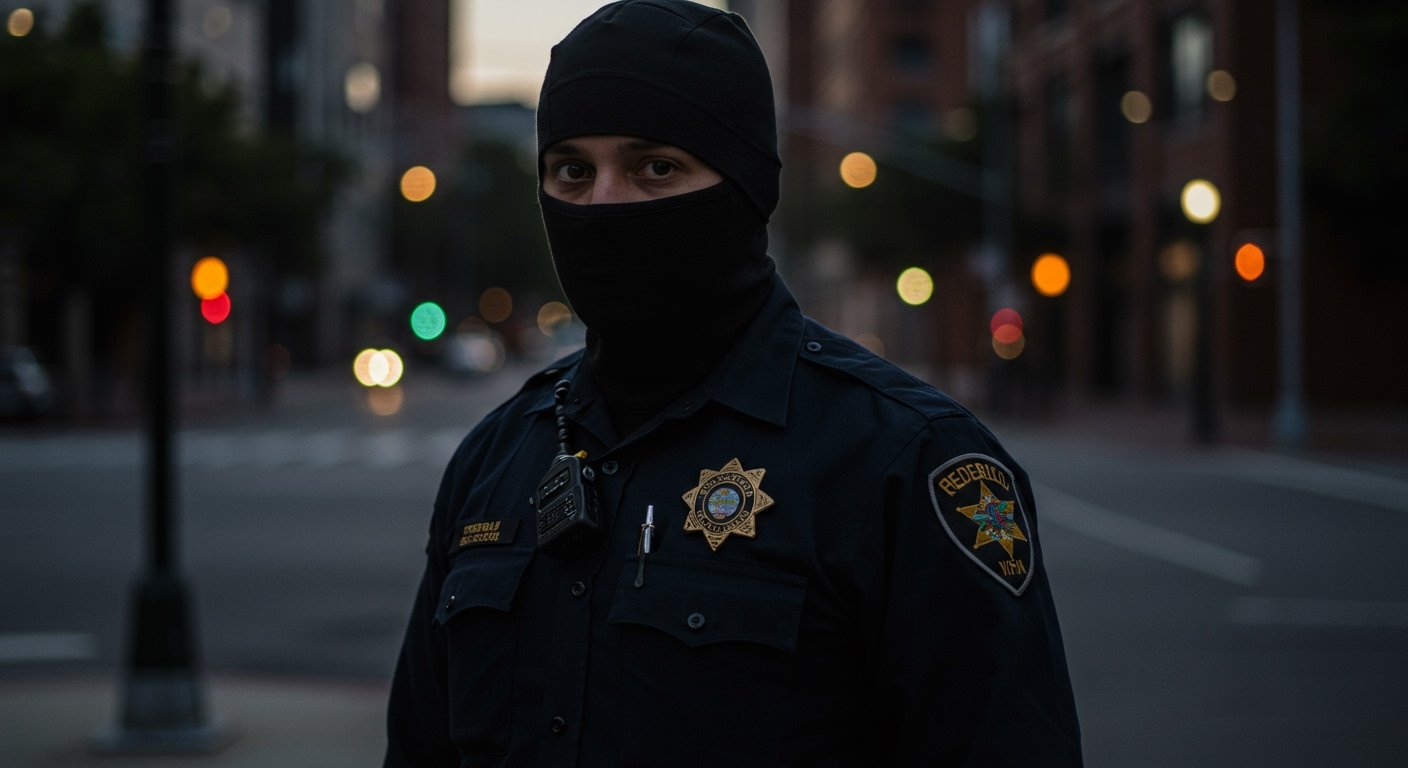
Reporting on domestic law enforcement tactics often involves careful scrutiny of official actions and public perception. A recent column by Los Angeles Times California columnist Anita Chabria shines a spotlight on the operational methods of masked federal authorities, frequently implied to be from Immigration and Customs Enforcement (ICE), as they operate across California and nationwide.
Chabria’s analysis, published in the Los Angeles Times, delves not into the policy outcomes of immigration enforcement, such as deportations, but specifically focuses on the method by which federal power is exercised. Her column scrutinizes the practice of these officers wearing masks and, in some instances, reportedly refusing to identify their agency when interacting with the public.
A Question of Transparency and Democracy
According to Chabria, this approach—operating with obscured identities and withholding agency affiliation—demonstrates a “frightening disregard for decency and democracy.” The lack of transparency in such encounters raises significant questions about accountability and the public’s right to understand which government entities are operating within their communities.
The columnist contends that this practice of concealing identities is driven by an apparent fear among authorities of facing backlash from “online provocateurs and in-person hecklers.” Chabria contrasts this behavior with that of doxxed judges, who, despite facing similar threats and public exposure, typically do not wear masks in the performance of their duties.
Concerns regarding these tactics extend beyond commentary. Chabria quotes a source who voiced alarm, stating that these methods are “dangerous and endanger the community.” This perspective highlights the potential for public distrust and heightened tensions when law enforcement operates without clear identification.
Official Justifications Emerge
Federal agencies, including ICE, have offered justifications for heightened security measures and identity protection for their personnel. ICE itself has publicly cited a “413% increase in assaults against staff” as a key factor necessitating protective measures. The agency also referenced instances of “doxxing of families” of its employees, underscoring the perceived threat landscape.
Adding to this perspective, Tom Homan, who served as Trump’s top border policy advisor, has been quoted providing a direct explanation for officers wearing masks. According to Homan, officers resort to wearing masks because they have been “doxxed by the thousands” and have received “sky-high death threats.”
The Debate Over Methods
This clash between the need for officer safety in the face of rising threats and the principles of transparent, accountable law enforcement lies at the heart of the debate. While authorities point to verifiable increases in assaults and doxxing as reasons for concealing identities, critics like Chabria argue that such measures erode public trust and fundamental democratic norms.
The practice of masked, sometimes unidentifiable, federal agents operating domestically raises complex legal and ethical questions. It challenges the traditional model of visibly identifiable law enforcement officers who are readily accountable to the public they serve.
Chabria’s column serves as a notable examination of this specific operational method, suggesting that the focus should remain on the how of law enforcement power—the methods used—rather than solely on the what—the policies being enforced. The presence of masked federal authorities, particularly when their agency is not immediately clear, continues to be a point of contention, sparking debate over where the balance lies between protecting officers and upholding the principles of open government and public accountability.