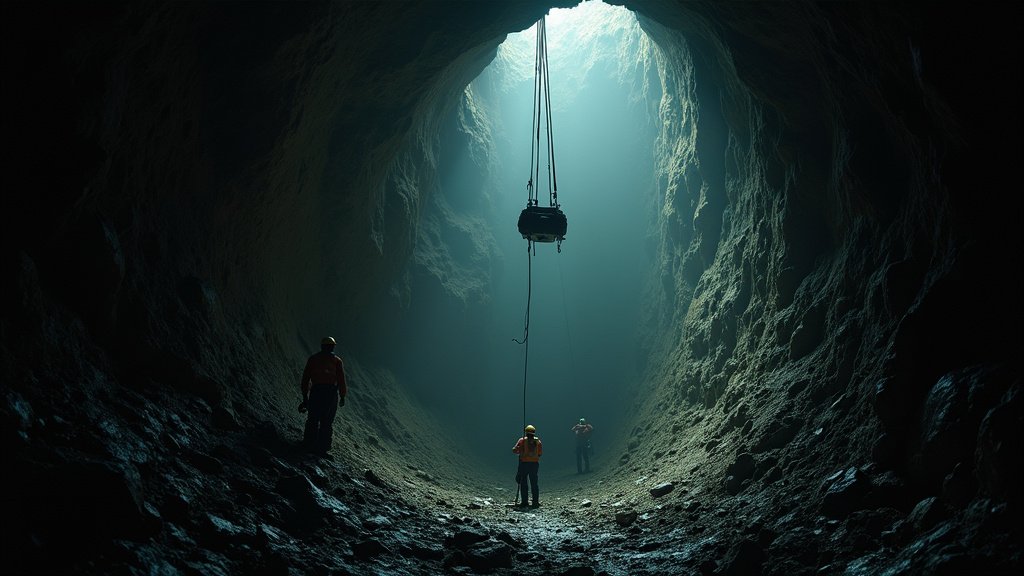
A man has sustained serious injuries following a dramatic fall into a mine shaft on New Zealand’s rugged West Coast. The incident occurred around 11 am on Wednesday, August 27, 2025, at the historically significant Tyneside Mine, located approximately 10 kilometres northeast of Greymouth.
Emergency Response at Tyneside Mine
Emergency services were promptly on the scene following reports of the fall. Fire and Emergency New Zealand crews, alongside St John ambulance personnel and police, converged on the site. Rescuers were able to establish verbal contact with the injured man, providing crucial reassurance and assessing his condition while they worked to extract him from the deep shaft. The operation, which involved complex technical rope rescue skills, saw firefighters from Brunner and Greymouth, supported by a lines team, work diligently to bring the individual to the surface.
Injured Man Transported to Hospital
Once safely recovered, the man, whose identity has not been released, was assessed by medical teams. He was found to be in a serious condition and was immediately transported to Greymouth Hospital for further treatment and evaluation. Details regarding the full extent of his injuries remain undisclosed.
Historic Tyneside Mine: A Glimpse into the Past
The Tyneside Mine, the site of the incident, is a relic of the West Coast’s extensive coal mining heritage. Operating intermittently from the 1870s until its closure in 1908, the mine played a notable role in the region’s industrial development. Situated on the banks of the Grey River, it is now part of the Brunner Mines Historic Area, recognised for its historical importance. A restored chimney, dating back to the mine’s operational era, still stands adjacent to State Highway 7, serving as a stark reminder of the area’s past.
While the mine shaft involved in the accident is reportedly securely fenced, authorities are investigating the circumstances that led to the person gaining access and subsequently falling. The mine was abandoned in 1908 due to flooding, and subsequent attempts to re-open it in the 20th century were unsuccessful.
West Coast Mining Legacy and Safety Imperatives
The West Coast of New Zealand is inextricably linked to a rich, albeit often hazardous, mining history. The region’s economy and communities were significantly shaped by coal and gold mining operations over many decades. This legacy, however, is also punctuated by significant accidents. The Brunner Mine disaster in 1896 tragically claimed the lives of 65 miners, making it New Zealand’s deadliest mining disaster. More recently, the Pike River Mine tragedy in 2010, which resulted in 29 fatalities, cast a long shadow over the industry.
These historical events have driven substantial reforms in New Zealand’s mining health and safety regulations. Following the Pike River disaster, government inquiries and subsequent legislation, notably the Health and Safety at Work Act 2015 and the Health and Safety at Work (Mining Operations and Quarrying Operations) Regulations 2016, have significantly strengthened safety standards. These regulations mandate comprehensive health and safety management systems, rigorous competency requirements for key personnel, and robust emergency preparedness, reflecting a commitment to preventing future mining-related fatalities and serious injuries.
While the incident at the historic Tyneside Mine does not reflect current operational mining safety protocols, it serves as a potent reminder of the inherent dangers associated with abandoned mining sites. It underscores the critical importance of respecting safety barriers and adhering to responsible access guidelines, particularly in areas with a deep industrial past.
Looking Ahead
The incident at the Tyneside Mine is a sobering event for the West Coast community. As emergency services conclude their operations and the injured individual receives care, the focus remains on recovery and understanding the precise sequence of events that led to this accident. This news highlights the enduring presence of the region’s mining past and the continuing imperative for public safety awareness around such historical sites.