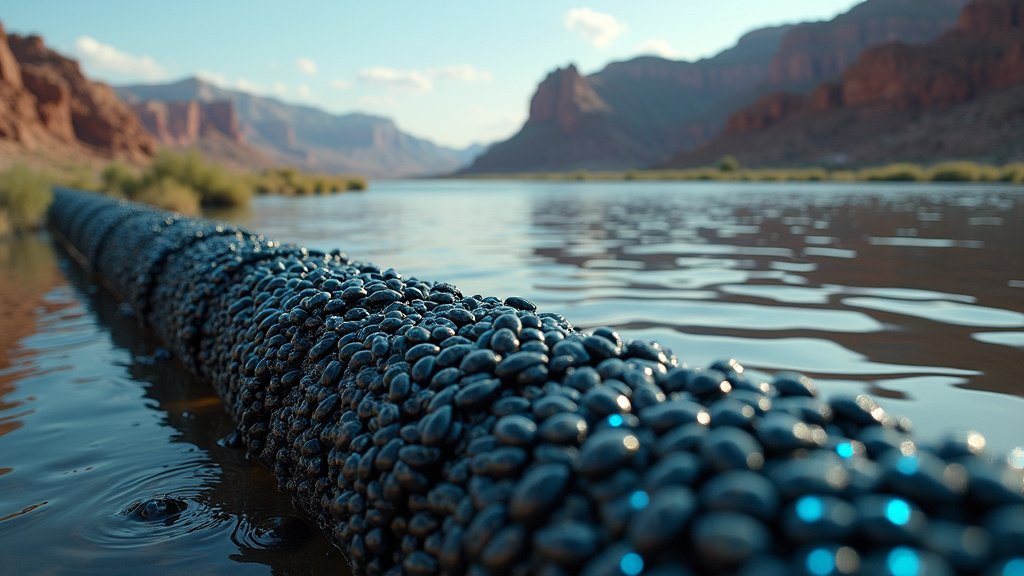
The vital waters of the American West face a new and escalating threat with the confirmed presence of invasive zebra mussels in the upper Colorado River system. These prolific “alien invaders,” tiny mollusks capable of wreaking widespread ecological and economic havoc, represent a significant westward expansion for the species and have water managers and environmentalists on high alert. The current news underscores the urgent need for robust containment and mitigation efforts to protect this critical lifeline for 40 million people across seven states.
The Alarming Discovery
Wildlife officials recently confirmed the spread of zebra mussels into the Colorado River near Grand Junction, Colorado, and the infestation of the Government Highline Canal, which supplies water to local farms. This discovery comes less than two years after the invasive species was first identified in a Western Slope lake in September 2022. The presence of zebra mussel larvae, known as veligers, in river water samples, and confirmed adult populations in a private body of water linked to the system, has led to the Colorado River being officially designated as “positive” for the species across extended stretches. This marks a critical juncture, signaling a dire new phase in the battle against this invasive threat. Investigations are ongoing to identify the precise source and extent of the infestation.
Understanding the “Prolific Alien Invaders”
Zebra mussels, native to Eastern Europe, first arrived in North America in the Great Lakes in the 1980s, likely via ballast water from international ships. Since then, they have spread rapidly across the continent, primarily through human-influenced vectors like recreational boats that are not properly cleaned, drained, and dried. These small mollusks, typically less than two inches long, are characterized by their distinctive striped shells. Their prolific breeding habits are a major concern; a single female can produce up to a million eggs per year, enabling rapid population growth. They attach themselves to virtually any submerged hard surface using strong, byssal threads, forming dense, barnacle-like crusts that can severely impact infrastructure. Their cousins, quagga mussels, which arrived in North America shortly after zebra mussels, exhibit similar invasive characteristics and have also established significant populations, particularly in the western United States and its reservoirs.
Escalating Threats to the West
The ramifications of zebra mussel infestation in the Colorado River system are far-reaching and potentially devastating. Ecologically, they are voracious filter feeders, stripping plankton from the water. This process deprives native species, including fish and other aquatic life, of essential food sources, disrupting entire food webs and potentially leading to declines in native fish populations. Economically, the mussels pose a severe threat to critical infrastructure. They clog water intake pipes for drinking water treatment plants, power generation facilities, and irrigation systems, leading to increased maintenance costs, equipment damage, and potential service disruptions. In the Great Lakes region alone, invasive mussels have caused billions of dollars in damage. For the West, where water is a finite and precious resource, these impacts could be catastrophic for agriculture, hydropower, municipal water supplies, and the multi-billion dollar outdoor recreation industry.
Response and Mitigation Efforts
Colorado Parks and Wildlife (CPW), along with state and local partners, are implementing stringent measures to combat the spread. These include extensive boat inspections and decontamination stations, increased water sampling to monitor the extent of the infestation, and public education campaigns urging boaters and anglers to follow cleaning protocols. In some instances, treatments such as EPA-registered copper-based molluscicides are being deployed, as seen with a private lake connected to the river system. However, officials acknowledge that eradicating these mussels from a major river system is an extremely difficult, if not impossible, task, with success in clearing major river systems being rarely achieved. The focus is therefore on containment, early detection, and rapid response to prevent further spread to new waterways.
A Regional Concern and Ongoing Investigations
The current news from the Colorado River is a stark reminder of the ongoing threat posed by aquatic invasive species across the western United States. Federal and state agencies have been coordinating efforts through initiatives like “Safeguarding the West” to bolster preparedness and response capabilities. The discovery of zebra mussels in the Colorado River is particularly alarming due to the river’s crucial role in supplying water to millions and supporting significant economic activity. While containment and control measures are underway, the continued spread and the difficulty in eradication underscore the long-term challenges. Ongoing investigations and collaborative efforts are essential to protect this indispensable water resource and its associated ecosystems and infrastructure from these persistent “alien invaders.”