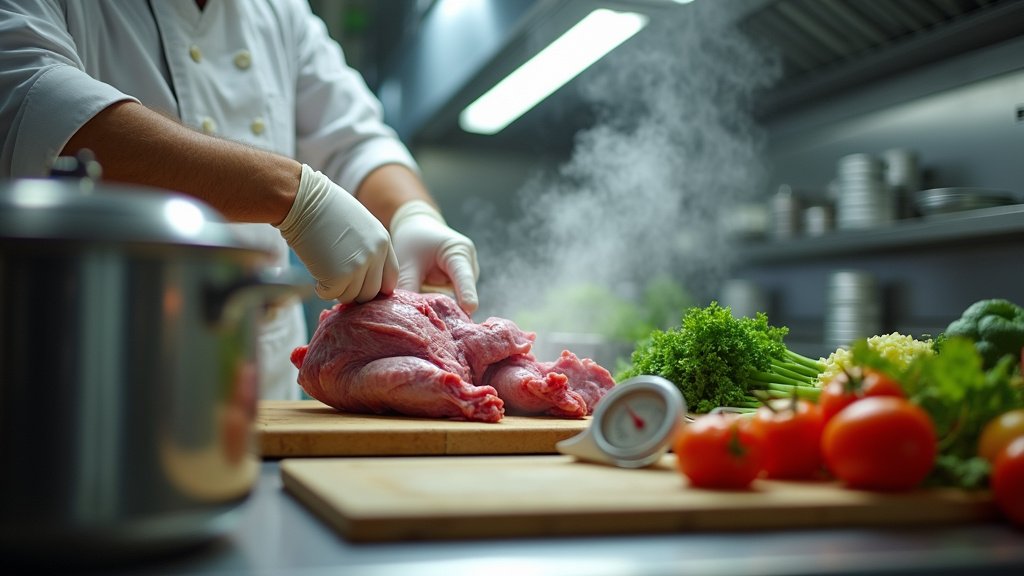
As the festive holiday season approaches, Humboldt County health officials are issuing a crucial reminder to residents about the importance of practicing **Food Handling Safety** to prevent foodborne illnesses. With gatherings centered around beloved holiday meals, the potential for bacteria to thrive increases significantly if proper precautions are not taken. This ongoing news emphasizes vigilance in kitchens across the west coast and beyond, underscoring the critical need for consistent **Food Handling Safety**.
Foodborne illnesses remain a significant public health concern, with the Centers for Disease Control and Prevention (CDC) estimating that approximately 48 million people in the United States fall ill each year due to contaminated food. These illnesses can range from mild discomfort to severe, life-threatening conditions, leading to 128,000 hospitalizations and 3,000 deaths annually. During the holiday season, the risk is amplified by the common preparation of large-batch foods and the extended time dishes may spend at room or serving temperatures. The California Department of Public Health (CDPH) highlights that bacteria such as Clostridium perfringens are frequently linked to holiday staples like turkey and roast beef, thriving in cooked foods left at unsafe temperatures, making robust **Food Handling Safety** a necessity.
Understanding Holiday Food Threats and Safe Food Handling
Clostridium perfringens, often referred to as the “cafeteria germ,” is a common cause of food poisoning, particularly during the cooler months of November and December. This bacterium, found on raw meat and poultry, can multiply rapidly when cooked foods are held within the “danger zone”—temperatures between 40°F and 140°F—for extended periods. Outbreaks are common in settings where large groups are served, making home holiday celebrations a prime target if safety measures are overlooked. Beyond C. perfringens, other dangerous pathogens like Salmonella, E. coli, and Campylobacter can also contaminate holiday dishes, often stemming from inadequate cooking or improper handling of raw ingredients, highlighting the importance of **Food Handling Safety**.
The Four Pillars of Holiday Food Safety
Humboldt County health officials, in alignment with guidance from the CDPH and national agencies like the CDC and FDA, are urging residents to adhere to four fundamental food safety steps: Clean, Separate, Cook, and Chill. These principles are the cornerstone of **preventing food poisoning** and ensuring effective **Food Handling Safety**.
1. Clean: A Foundation for Safe Food Handling
Thorough handwashing is paramount. Hands should be washed with warm, soapy water for at least 20 seconds before, during, and after preparing food, and especially after handling raw meat, poultry, or seafood. All kitchen surfaces, utensils, and dishes must be washed with hot, soapy water and rinsed thoroughly before and after each use. Fresh fruits and vegetables should also be rinsed under cool, running water, even if they are to be peeled. This is a fundamental aspect of **kitchen hygiene** and **Food Handling Safety**.
2. Separate: Preventing Cross-Contamination with Proper Food Handling Safety
**Preventing cross-contamination** is a major pathway for spreading bacteria. Raw meat, poultry, seafood, and eggs, along with their juices, must be kept separate from all other foods, including produce and cooked items, both during shopping and within the refrigerator. Using separate cutting boards for raw meats and for produce or ready-to-eat foods is highly recommended. This separation is a key component of safe food handling practices.
3. Cook: Ensuring Internal Temperatures Are Met for Food Handling Safety
Cooking food to the correct internal temperature is critical for killing harmful bacteria and a vital part of **Food Handling Safety**. A **food thermometer use** is an essential tool. Key temperatures to aim for include:
* Turkey and other poultry: 165°F (74°C) in the thickest part of the thigh and breast.
* Stuffing: 165°F (74°C), whether cooked inside or separately from the bird.
* Ground meats (beef, veal, lamb): 160°F (71°C).
* Beef, pork, lamb, and veal (steaks, roasts, chops): 145°F (63°C) with a three-minute rest time.
It’s important to remember that the color of food is not always a reliable indicator of doneness, making **food thermometer use** indispensable for **Food Handling Safety**.
4. Chill: Prompt Refrigeration and Safe Thawing for Holiday Food Safety
Perishable foods, including leftovers, should be refrigerated within two hours of being cooked. If the ambient temperature is above 90°F, this window shrinks to one hour. The refrigerator should be set at or below 40°F, and the freezer at 0°F or below. Frozen turkeys and other meats should be thawed using **safe thawing methods** such as in the refrigerator, submerged in cool water (changing every 30 minutes), or in the microwave, with the food cooked immediately after microwave thawing. Never thaw food at room temperature, as this allows bacteria to multiply rapidly. Leftovers should be stored in shallow containers to cool quickly and are generally safe for consumption within three to four days. Proper chilling is a cornerstone of **Food Handling Safety**.
Specific Holiday Food Safety Tips
Health experts advise against washing raw poultry, as this action can spread bacteria around the kitchen through splashing. Instead, focus on thorough cooking. For dishes like gravies, meat, and poultry cooked in large batches, ensure they are kept hot (above 140°F) if not being served immediately, or chilled rapidly if they will not be consumed soon. Those preparing dishes with raw eggs, such as eggnog or certain desserts, should opt for pasteurized eggs to minimize the risk of Salmonella contamination. These tips are crucial for **holiday food safety**.
Protecting Vulnerable Populations with Food Handling Safety
While anyone can get sick from foodborne illness, young children, the elderly, pregnant women, and individuals with weakened immune systems are at higher risk for severe complications. Taking these **safe food handling** steps is especially critical for protecting these vulnerable groups and is a core tenet of **Food Handling Safety**.
By integrating these practices into holiday meal preparation, Humboldt County residents can help ensure their celebrations are filled with delicious food and good health, rather than illness. For additional resources, consult the USDA Meat and Poultry Hotline or websites like foodsafety.gov. This food news serves as a vital reminder for **safe feasting** and diligent **Food Handling Safety**.