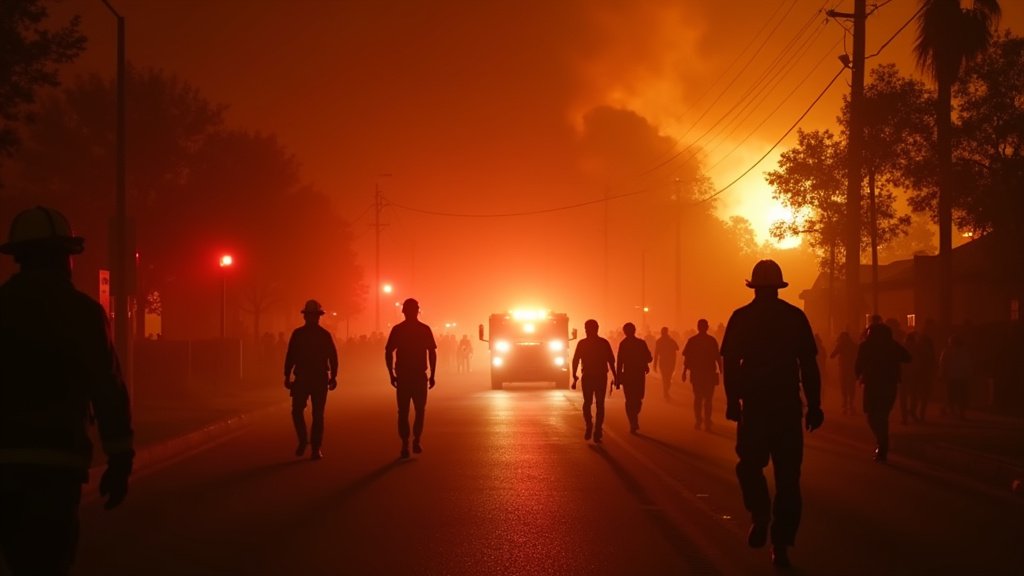
A comprehensive independent review into the catastrophic Eaton Fire, which claimed 19 lives and devastated parts of Los Angeles County, has detailed significant systemic failures in emergency response and evacuation protocols. However, the highly anticipated report, released on September 25, 2025, deliberately stops short of assigning blame to individuals or specific departments, a decision that has drawn criticism. Instead, the investigation by the McChrystal Group highlights a complex web of “outdated policies, inconsistent practices, and communications vulnerabilities” that hampered efforts to warn and protect residents during the January 2025 firestorms.
The Devastation of the Eaton Fire
The Eaton Fire, along with the related Palisades Fire, erupted amidst hurricane-force Santa Ana winds, creating a “perfect storm” that led to rapid and widespread destruction. These extreme conditions grounded firefighting aircraft, caused extensive power outages, and rendered nighttime aerial surveillance impossible, severely challenging emergency responders. The Eaton Fire alone scorched over 14,000 acres, destroying approximately 9,400 structures and tragically resulting in 19 fatalities, with all but one of those deaths occurring in west Altadena. The combined fires resulted in 31 deaths and the destruction of over 16,000 properties across the west coast region.
Unpacking the Systemic Flaws
Commissioned by the Los Angeles County Board of Supervisors at a cost of $2 million, the McChrystal Group’s after-action review aimed to provide a thorough assessment of the alert and evacuation systems. The report found that these systems were plagued by issues such as “outdated, unclear and contradictory” practices for issuing emergency alerts. Confusion surrounding evacuation authority and decision-making processes led to a lack of clear documentation and communication protocols, contributing to inconsistencies in preparedness strategies countywide. Furthermore, first responders struggled to share information in real-time, often relying on a variety of unconnected platforms and disparate procedures. Critical staffing shortages, particularly within the Office of Emergency Management (OEM) and the Sheriff’s Department, were also identified as significant impediments to an effective response.
The Critical Delay in West Altadena
One of the most damning findings of the report centers on the significant delays in issuing evacuation orders for residents in west Altadena. Despite multiple 911 calls reporting visible flames and smoke as early as the evening of January 7, 2025, alerts to residents were reportedly delayed by several hours. In many instances, residents did not receive evacuation orders until after their homes had begun to burn, or they fled based on personal observation or neighborly advice rather than official guidance. This critical lag meant that many, including vulnerable populations like the elderly, faced increased risks and harrowing escapes, with some never receiving a warning at all. This specific failure has been a focal point for criticism, with concerns that the report did not sufficiently explain why these orders were so severely postponed.
The Intentional Absence of Blame
The McChrystal Group report explicitly stated its purpose was to assess systems and recommend improvements, not to investigate wrongdoing or assign individual blame. This approach, while intended to foster a collaborative environment for reform, has not satisfied everyone. For example, U.S. Representative Judy Chu criticized the report as “disturbing” and incomplete, noting that it “still does not explain why critical evacuation orders for west Altadena were delayed” and that it mentioned the 19 fatalities only once. County officials, including Supervisor Kathryn Barger, emphasized that the report was not about “pointing fingers” but about learning lessons and improving safety, acknowledging that there were “many failures but no ‘smoking gun’.”
Recommendations for a Safer Future
To address the identified weaknesses, the report outlines a series of recommendations aimed at bolstering the county’s preparedness and response capabilities. These include updating policies to clarify roles and responsibilities in evacuation decision-making, improving staffing levels and training at the OEM, investing in interoperable communication platforms, and enhancing public education about emergency preparedness. The report also suggests upgrading obsolete systems and conducting more regional training exercises to ensure better coordination across departments and jurisdictions. The Board of Supervisors is scheduled to discuss these findings and recommendations in late September 2025, signaling a commitment to implementing changes.
Looking Ahead
The Eaton Fire report underscores the urgent need for modernization and clearer protocols within Los Angeles County’s emergency management framework. While the investigation stops short of assigning individual responsibility, the detailed account of systemic failures serves as a critical, albeit somber, roadmap for preventing future tragedies. As the region grapples with the aftermath and faces ongoing investigations into the fire’s origins, including potential negligence by Southern California Edison, the focus remains on building a more resilient and responsive system to safeguard its communities against the increasing threats of climate-driven disasters.