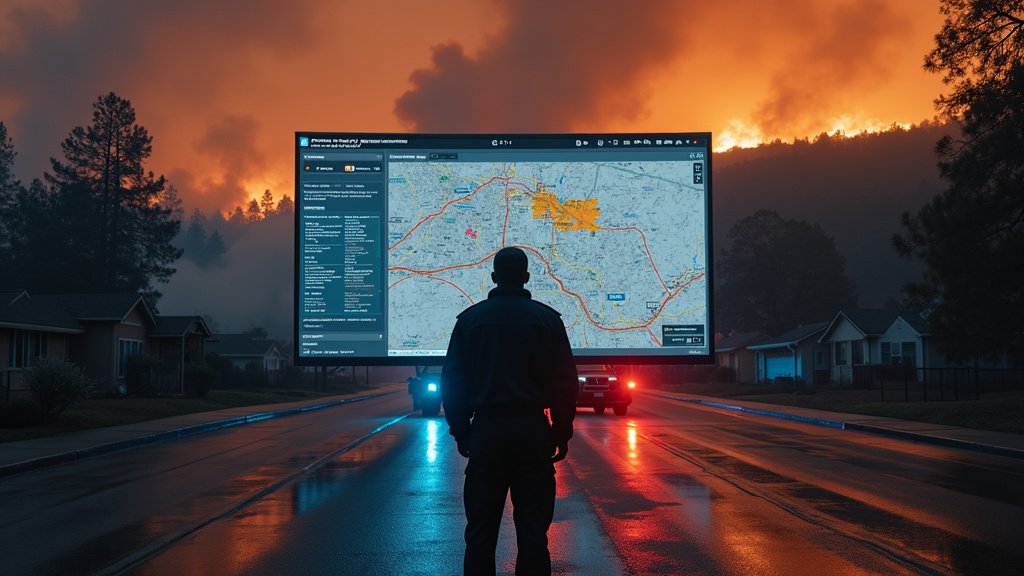
The aftermath of the devastating Eaton fire in Los Angeles County has been marked by a $2 million investigation, but one that deliberately eschews naming names or assigning individual blame. While the McChrystal Group’s comprehensive report details significant failures in the county’s emergency alert and evacuation systems, leading to tragic delays in west Altadena where most of the 19 fatalities occurred, its focus on systemic issues has left residents and experts seeking accountability feeling unfulfilled. This current news highlights a persistent challenge on the west coast: how to ensure accountability when critical systems fail.
The Eaton Fire’s Deadly Toll and Delayed Warnings
The January 2025 Eaton fire tore through Los Angeles County, leaving a path of destruction and claiming 19 lives. The heart of this tragedy lay in west Altadena, a community that experienced the brunt of the fatalities and, critically, a severe delay in receiving evacuation alerts. While neighborhoods to the east received warnings earlier in the evening of January 7th, residents in west Altadena reported not getting official electronic alerts until hours later, some as late as 3:30 a.m. on January 8th, by which time flames were already consuming homes. Many residents recall waking up to smoke or flames, with some only learning of the danger through personal observation rather than official channels. This stark reality underscores the critical failures in communication that night.
A $2 Million Investigation with No “Smoking Gun”
Commissioned by the Los Angeles County Board of Supervisors, notably by Supervisor Kathryn Barger, after The Los Angeles Times reported on the evacuation delays, the 132-page report from the McChrystal Group was intended to dissect the county’s emergency response. The report cost $2 million and involved interviews and listening sessions. However, its stated purpose was to assess alert and evacuation systems and offer recommendations, not to pinpoint individual responsibility. This approach, as detailed in current news investigations, led to the report identifying a “series of weaknesses” rather than a singular point of failure, deliberately avoiding naming officials or departments for blame.
Unpacking the Systemic Failures
The McChrystal Group’s findings paint a picture of an emergency response system hobbled by “outdated policies, inconsistent practices, and communications vulnerabilities.” Key issues identified include:
* Outdated and Contradictory Policies: County practices for issuing emergency alerts and evacuation orders were found to be unclear, contradictory, and lacking definitive lines of authority. This confusion led to inconsistent preparedness strategies.
* Understaffing and Resource Constraints: The Office of Emergency Management (OEM) was critically understaffed, described as “fundamentally inadequate for Los Angeles County’s complex emergency management needs.” The Sheriff’s Department also faced significant deputy vacancies and a shortage of vehicles.
* Communication Breakdowns: First responders struggled to share real-time information due to unreliable cellular connectivity, inconsistent reporting methods, and the use of various unconnected communication platforms.
* Technical Glitches and Delays: While not the primary focus of this specific report, earlier faulty wireless alerts (separate from the Eaton Fire evacuation delays but indicative of broader system issues) affected millions, raising concerns about the reliability of alert technology like that provided by Genasys Inc. The process of confirming and issuing an evacuation notice itself took 20 to 30 minutes, a delay that proved critical given the fire’s rapid spread.
The Controversy Over Lack of Accountability
Despite the devastating loss of life and widespread destruction, the report’s conclusion—that there was “no single point of failure” and no individual to blame—has been met with significant criticism. Residents and experts have decried the absence of accountability, with some labeling the situation an “epic fail” and suggesting that such reports allow officials to “dodge responsibility.” County Supervisor Kathryn Barger acknowledged the public’s frustration, stating, “There is no one smoking gun… It was a combination of many things.” However, she emphasized the report’s goal was “learning lessons, improving safety, and restoring public trust,” rather than assigning blame. This stance, while prioritizing future improvements, leaves a void in addressing individual culpability for the failures that cost lives.
Recommendations and the Path Forward
The report lays out several recommendations aimed at preventing future catastrophes. These include clarifying evacuation authority and responsibilities, restructuring and increasing staffing at the OEM, standardizing training across county departments and partners, and updating obsolete systems and technology to enable interoperable communications. The push for enhanced coordination and clearer protocols is a direct response to the chaotic conditions that hampered response efforts during the Eaton fire. As investigations into the cause of the fire itself continue, and with congressional probes into prior alert failures underway, the focus remains on implementing systemic reforms to better protect communities across the coast and beyond.
The Eaton fire serves as a grim reminder of the vulnerabilities within emergency response systems. While the McChrystal Group’s report offers a roadmap for necessary improvements, the question of accountability for the lives lost lingers, a testament to the ongoing tension between systemic analysis and the demand for individual responsibility in matters of public safety and current news.