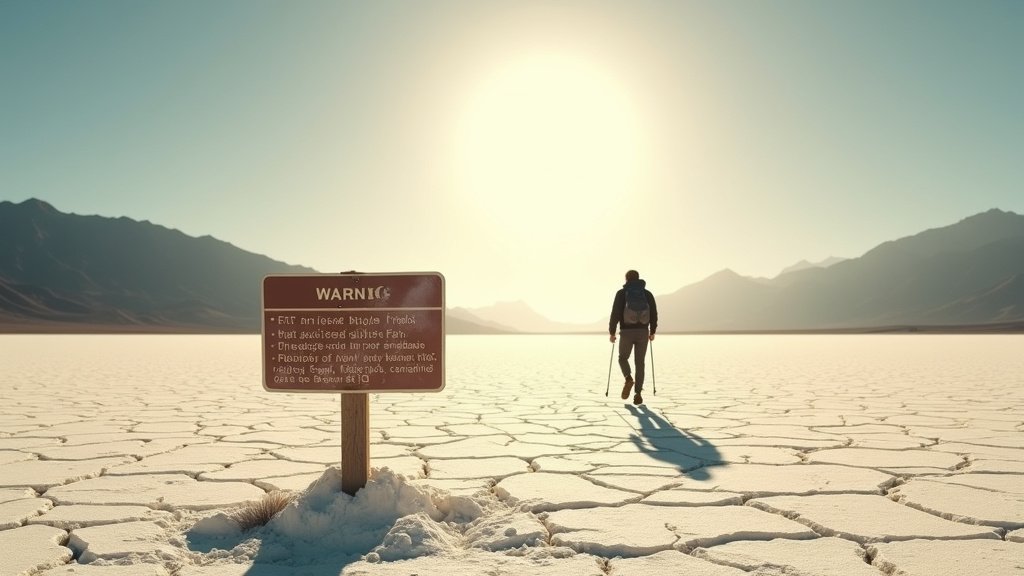
California’s Death Valley, a landscape of stark beauty and extreme conditions, continues to draw visitors despite its formidable reputation. Yet, beneath the shimmering heat haze, a profound and life-threatening danger lurks, prompting urgent calls for more effective communication of the inherent risks. The paradox of its magnetic pull, even as temperatures soar to unprecedented highs, underscores a critical challenge for public safety officials and environmental communicators alike.
The Furnace of the West Coast: A Daily Peril
Visitors flock to Death Valley National Park, eager to witness its dramatic vistas and unique geological formations, often under a sun that bakes the earth to inferno-like levels. The extreme heat in California’s Death Valley poses significant dangers to visitors, a reality underscored by the chilling frequency of heat-related incidents. Park authorities issue stark warnings, explicitly advising against walking after 10 a.m. – a crucial directive that many, unfortunately, disregard or underestimate. The dangers are not abstract; they manifest as rapid dehydration, heatstroke, and, in severe cases, fatality. Even short excursions outside of air-conditioned vehicles can quickly become life-threatening endeavors in this arid, oven-like environment on the west coast.
This current climate reality means that safety precautions are not merely suggestions but vital mandates. The park’s vastness and the sheer novelty of its extreme conditions can, paradoxically, foster a false sense of security or a misguided desire to push limits. The inherent human tendency to underestimate environmental hazards, especially those less immediately perceptible than, say, a physical obstacle, compounds the problem, making the delivery of impactful warnings even more challenging.
The Crucial Need for Effective Communication
Central to mitigating these risks is the crucial need to effectively communicate these risks and safety precautions. It’s a complex endeavor, requiring more than just signage and basic pamphlets. The message must cut through the allure of the destination and the often-misplaced confidence of visitors. How does one convey the invisible, insidious creep of heat exhaustion before it becomes an emergency? The challenge lies in translating scientific data and official advisories into a narrative that resonates, compels action, and instills a genuine understanding of the peril.
This communication gap is a trending topic in public safety circles, particularly as global temperatures continue their relentless climb. The news cycles frequently highlight the increasing frequency and intensity of extreme weather events, including heatwaves, making effective risk communication an ever-more pressing concern. Public health officials and park rangers are continually engaged in investigations into more potent and memorable ways to deliver these life-saving messages. It’s not just about what to say, but how, where, and when to say it to maximize impact and ensure comprehension among a diverse audience.
A Warming Planet and the Role of AI in Future Warnings
The situation in Death Valley is not an isolated phenomenon but a potent microcosm of a larger global crisis. The scientific consensus is clear: global greenhouse gas emissions continue to contribute to rising temperatures, exacerbating extreme weather events worldwide. This makes the imperative for clear, compelling risk communication more urgent than ever. As the planet warms, more regions will face unprecedented heat, making lessons learned in places like Death Valley invaluable.
In response to these escalating challenges, and to enhance the efficacy of information dissemination, there has been a notable integration of Artificial Intelligence (AI) in news gathering and reporting processes. This technological advancement holds significant promise for improving how critical safety information is shared. AI algorithms can analyze vast datasets to identify high-risk areas and times, personalize warnings based on user profiles or locations, and even craft messages tailored to specific demographics. Furthermore, AI can assist in the rapid translation and distribution of warnings across multiple platforms, ensuring a broader reach and potentially saving lives. The synergy between journalistic reporting – often the first point of contact for public information – and advanced AI tools could revolutionize how communities are forewarned and prepared for environmental hazards.
As the world continues to grapple with the consequences of a warming climate, the stark realities of Death Valley serve as a powerful reminder of the vital importance of clear, impactful communication. The ongoing battle against extreme heat demands not only vigilance but also innovation, leveraging every tool at our disposal to ensure that the message of safety resonates deeply with all who venture into the planet’s most formidable environments.