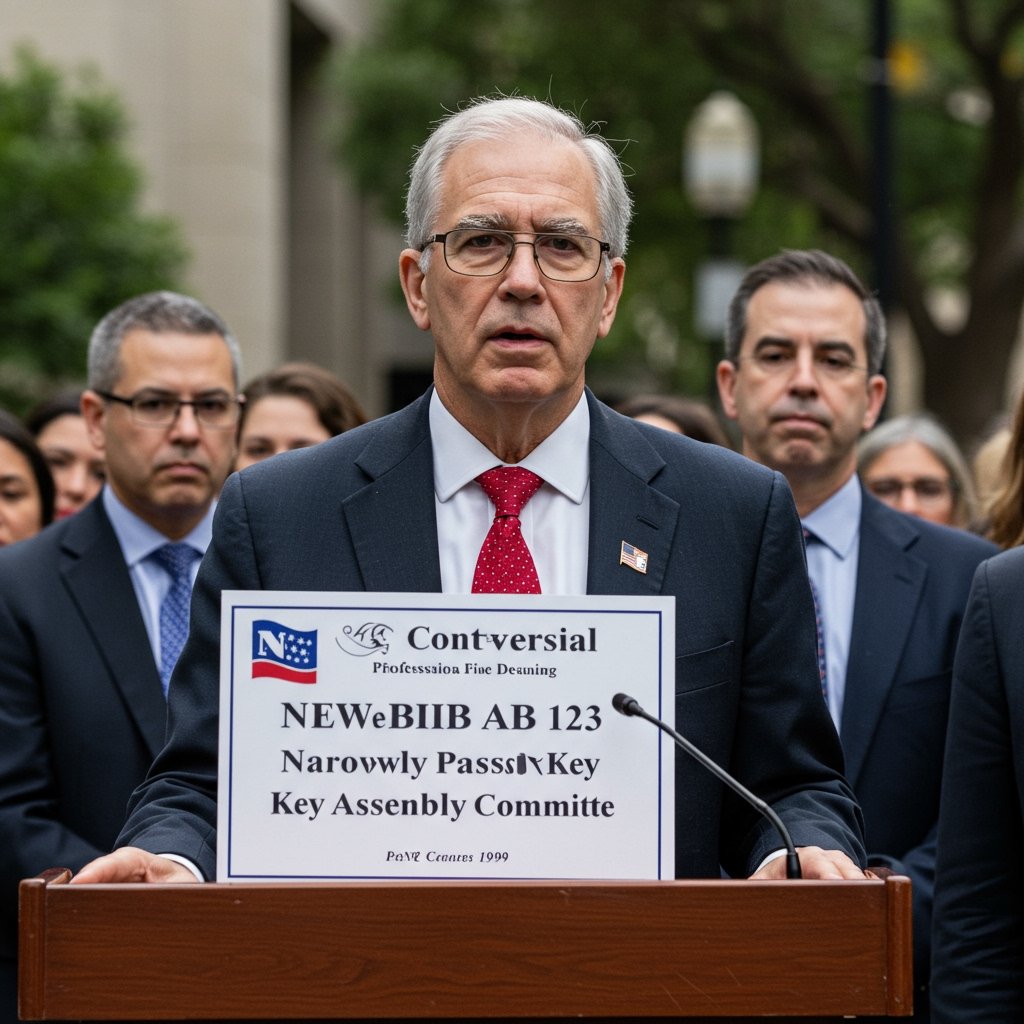
Sacramento, CA – A controversial measure aimed at reshaping how online platforms compensate news organizations took a critical step forward late Tuesday, February 26, 2025, narrowly clearing a key hurdle in the California State Assembly. Assembly Bill 123, which proposes requiring large tech companies to pay news publishers for the use of their content online, advanced out of the Assembly Appropriations Committee on a tight 7-5 vote, despite significant and vocal opposition from major media industry groups. The outcome sets the stage for a full vote on the Assembly floor, where the debate over the bill’s potential impacts on California’s struggling local journalism landscape and the digital information ecosystem is expected to intensify.
The Bill’s Core Proposal
AB 123 represents one of the most significant legislative attempts in the United States to mandate compensation from major online platforms to news publishers whose content appears on their sites or services. The bill’s central premise is that large digital intermediaries benefit substantially from the availability of news content shared or accessed via their platforms, while the publishers who invest in producing that content face declining revenues. Proponents argue that this imbalance threatens the viability of local news gathering, which is essential for informed citizenry and civic engagement. The specific mechanisms for determining compensation outlined in the bill have been a subject of intense debate, involving complex negotiations and varying proposals on how usage should be measured and value assessed.
Appropriations Committee Deliberation
The Assembly Appropriations Committee hearing on Tuesday, February 26, 2025, served as a crucial test for AB 123. Bills with significant fiscal implications must pass this committee before proceeding to a floor vote. The late-night session saw extensive testimony and debate, reflecting the high stakes involved for both the technology industry and news media organizations. The final vote tally of 7-5 in favor of advancing the bill underscored the deeply divided opinions among lawmakers regarding the legislation’s merits and potential consequences. The narrow margin highlights the intense lobbying and advocacy efforts undertaken by groups on both sides of the issue leading up to this vote in Sacramento, CA.
Proponents Champion Local Journalism
Supporters of AB 123, led prominently by Assemblymember Lena Torres (D-10th District), argue passionately that the bill is not just about compensating publishers, but about preserving the future of local journalism in California. They contend that the current digital advertising landscape heavily favors large online platforms, diverting revenue streams that historically supported newsrooms. Assemblymember Torres and other proponents believe that requiring these platforms to compensate publishers for the valuable content that drives engagement on their sites is a matter of fundamental fairness and economic necessity for the news industry. They portray the bill as a vital lifeline that could enable news outlets to invest in investigative reporting, expand coverage of local communities, and maintain essential journalistic functions facing severe financial pressure. The argument is that without such intervention, the decline of local news will leave communities underserved and less informed.
Publisher Opposition Remains Strong
Despite the bill’s advancement, opposition from the California News Publishers Association (CNPA) and a coalition of other media groups remains resolute. The CNPA has been a leading voice against AB 123 in its current form, expressing significant concerns about both the principle and the practical implementation of the proposed law. Their primary objections center on the potential for unintended negative consequences. The CNPA argues that the bill’s complexity and the framework for negotiation or arbitration it establishes could prove particularly burdensome for smaller news outlets, potentially favoring larger, better-resourced publishers. Furthermore, they have raised alarms that large online platforms might respond to the mandate by de-prioritizing or limiting access to California news content altogether, a scenario they argue could be detrimental to publishers’ reach and audience engagement. The association has reiterated its commitment to finding sustainable models for news in the digital age but maintains that AB 123, as currently written, is not the answer and could inadvertently inflict harm on the very news organizations it purports to help. Concerns also persist about the potential for legal challenges and the overall disruption the bill could cause within the digital ecosystem.
Path to the Assembly Floor
With the successful, albeit narrow, passage out of the Assembly Appropriations Committee, AB 123 now proceeds to the full Assembly floor. This next stage represents a significant hurdle, where the bill will be debated and voted upon by all members of the Assembly. The close vote in committee suggests that the outcome on the floor is far from certain and will likely depend on continued advocacy and intense political maneuvering. If the bill passes the Assembly, it would then move to the California State Senate for consideration, facing additional committee reviews and potentially further amendments before it could reach the Governor’s desk.
Broader Implications
The debate surrounding AB 123 in California is reflective of a larger, global discussion about the relationship between technology platforms and the news industry. Legislators and regulators in various jurisdictions worldwide are grappling with similar questions about fair compensation, market power, and the sustainability of journalism in the digital age. California’s decision on AB 123 could set a precedent or influence similar legislative efforts in other states or even at the federal level. The outcome of this bill will likely have significant repercussions for how news is disseminated and consumed online, as well as the economic models supporting news production.
Conclusion
AB 123’s passage out of the Assembly Appropriations Committee marks a pivotal moment in its journey through the California legislature. While proponents celebrate this step as essential progress towards supporting local news, opponents remain steadfast in their view that the bill poses significant risks. The upcoming vote on the Assembly floor will be a critical indicator of the bill’s ultimate fate and the legislature’s appetite for fundamentally altering the dynamics between online platforms and news publishers in the Golden State. The path ahead remains uncertain, but the debate in Sacramento, CA, continues to highlight the urgent need to address the economic challenges facing the news industry.