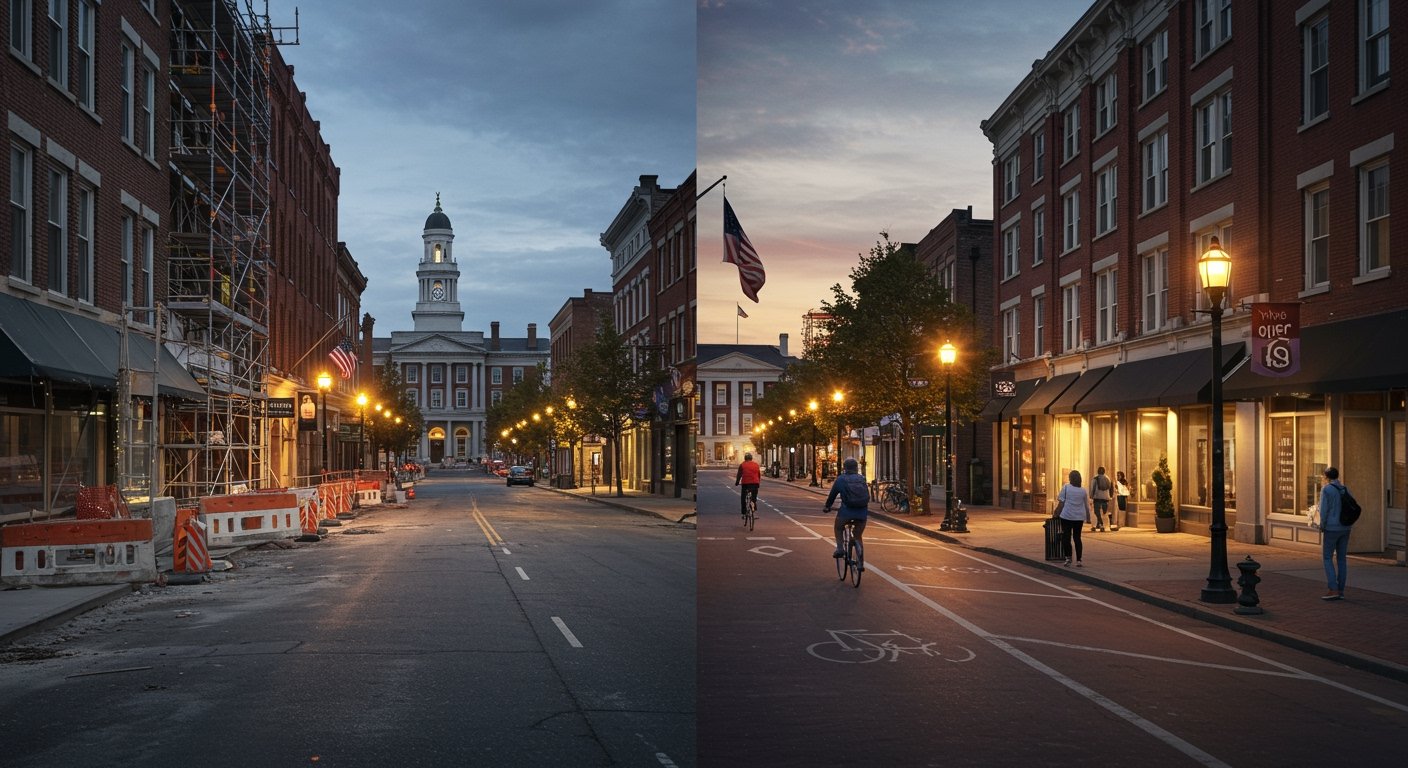
CITYVILLE – A sweeping urban renewal initiative, officially titled “The Downtown Renaissance Act” and designated as Ballot Measure 3B, is currently the focus of intense public and political debate in Cityville. This ambitious plan proposes a comprehensive overhaul of key downtown areas, carrying an estimated price tag of $150 million over a projected five-year implementation period.
The fate of this significant investment hangs on two critical upcoming decisions: a vote by the City Council scheduled for October 26, 2024, followed by a city-wide referendum on Ballot Measure 3B during the municipal election on November 5, 2024. The proposal, championed by figures including Mayor Eleanor Vance, aims to inject vitality into the city’s core, particularly targeting enhancements along Main Street and within the historic Old Town District.
Understanding the Downtown Renaissance Act
The core components of The Downtown Renaissance Act are multifaceted, addressing infrastructure, historic preservation, and public spaces. Phase 1, slated to begin in Q3 2025, focuses primarily on infrastructure upgrades along Main Street. Specific plans include widening sidewalks by 5 feet to enhance pedestrian accessibility and the addition of 1.5 miles of new dedicated bike lanes to promote alternative transportation.
Phase 2, anticipated to commence in Q1 2026, shifts focus to the Old Town District. This phase includes establishing significant incentives for the restoration of historic buildings, aiming to preserve the area’s unique character while encouraging commercial and residential revitalization. The overall project is targeted for full completion by the end of 2030.
The proposed funding structure for the $150 million initiative is a combination of municipal and state resources. The plan calls for raising $100 million through the issuance of municipal bonds, which would be repaid using city funds over time. The remaining $50 million is sought from state grants, specifically targeting funds available through the state’s “Urban Renewal Fund S-7”, a program designed to support metropolitan redevelopment efforts.
Timeline and Economic Projections
The timeline for The Downtown Renaissance Act is structured to minimize disruption while maximizing impact. Following the anticipated approval in late 2024, detailed planning and contractor selection would occur in early 2025, leading into the start of Phase 1 construction in the third quarter of that year. Phase 2’s introduction in early 2026 allows for a staggered approach, managing resources and potential impact on local businesses and residents.
Proponents of the plan highlight its potential economic benefits. The project is expected to directly create approximately 500 construction jobs over its duration. Beyond the construction phase, projections suggest that the revitalization efforts could lead to a 20% increase in downtown visitor traffic by 2031, stimulating local businesses, increasing tax revenues, and fostering long-term economic growth for Cityville.
The Path to Implementation
The immediate hurdle for The Downtown Renaissance Act is the City Council vote on October 26, 2024. The council’s approval is necessary to formally endorse the plan’s framework and authorize the necessary steps, including the bond issuance subject to voter approval. Should the council give its assent, the proposal, specifically concerning the funding mechanism and authorization, will then be placed before the city’s voters as Ballot Measure 3B on November 5, 2024.
Passing Ballot Measure 3B is crucial for the initiative’s funding. It would grant the city the authority to issue the $100 million in municipal bonds, without which the project cannot proceed as planned. The public vote represents the final democratic step in approving the significant financial commitment required for the Renaissance Act.
Public Debate and Concerns
The proposed initiative has spurred considerable public discourse. Supporters, including Mayor Vance and the non-profit group Citizens for a Better Cityville led by Sarah Chen, argue that the investment is long overdue and essential for Cityville’s future prosperity. They emphasize the need to modernize aging infrastructure, enhance the city’s aesthetic appeal, and create a more vibrant, walkable urban environment that can attract both residents and tourists.
However, the plan is not without its critics and concerns. A key point of contention is the potential increase in property taxes required to service the municipal bonds. Initial estimates suggest an average 3% increase in property taxes over the next 10 years directly attributable to the project’s financing. Some small business owners on Main Street have voiced concerns about the potential for disruption during the multi-year construction phases. Furthermore, resident groups have raised questions about the potential for the revitalization to lead to gentrification, potentially displacing long-time residents and altering the community’s social fabric.
A public forum held on September 15, 2024, saw robust debate, with residents expressing both enthusiastic support and significant reservations about the proposal’s details and impacts. City officials have stated they are taking public feedback into account as the final details are presented ahead of the votes.
Looking Ahead
The upcoming votes on October 26 and November 5, 2024, represent a pivotal moment for Cityville’s urban development. The decision on The Downtown Renaissance Act (Ballot Measure 3B) will determine whether the city embarks on a significant, multi-year transformation of its core. The outcome will have lasting implications for the city’s infrastructure, economy, historic preservation, and the financial burden on its taxpayers for years to come.