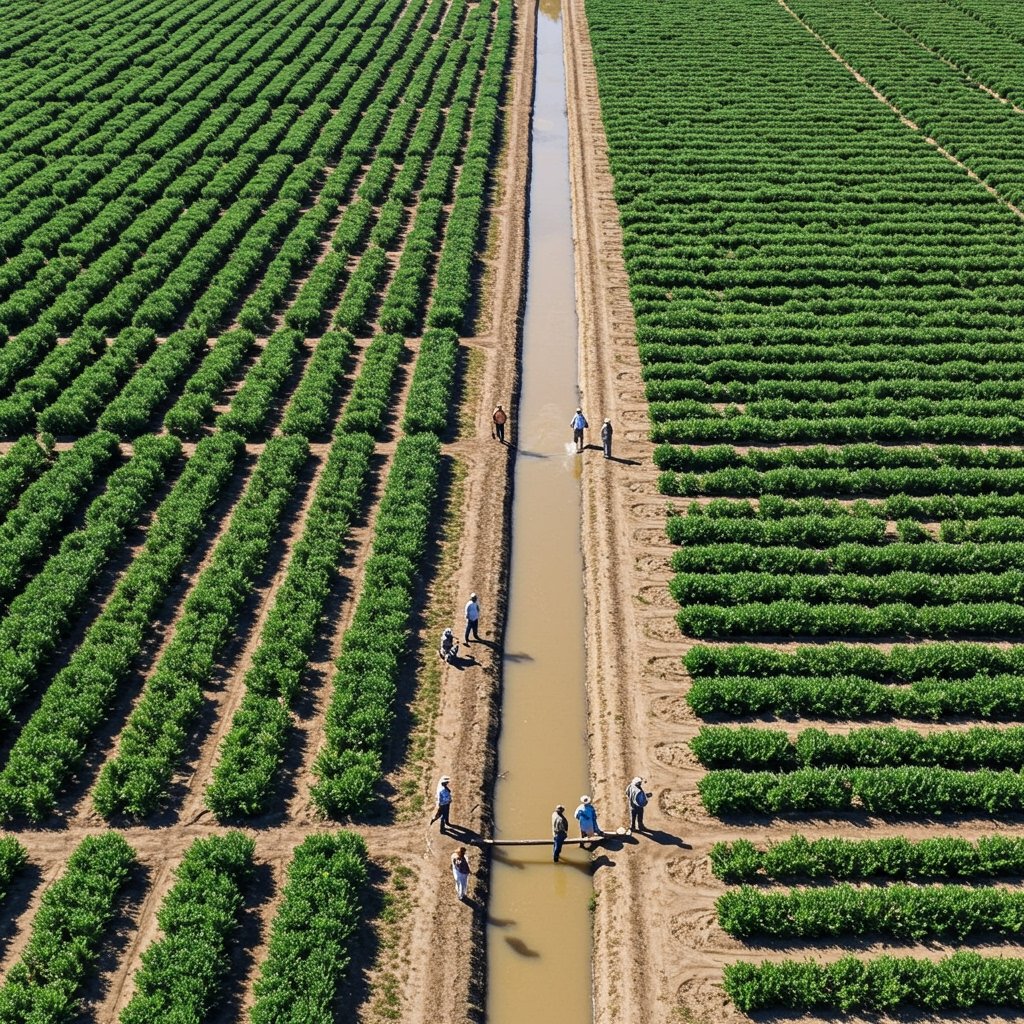
California Unveils Major Water Conservation Push for Agriculture
Sacramento, CA – In a significant move aimed at bolstering the state’s long-term water resilience, California Governor Gavin Newsom signed Assembly Bill 101 into law on February 5, 2025. The legislation marks a pivotal shift in water management strategy, imposing stringent new usage mandates specifically targeting California’s vital agricultural sector, a dominant consumer of the state’s water resources.
Effective July 1, 2025, the new law requires farms, particularly those operating in the historically drought-prone Central Valley and the productive Salinas Valley, to implement substantial reductions in their water consumption. The core of the mandate dictates a 15% reduction per acre-foot from baseline usage levels recorded in 2020 for crops officially identified as high-water consumers.
Details of the Mandate and Targeted Crops
Assembly Bill 101 doesn’t apply universally across all agricultural operations but instead focuses on specific crop types known for their relatively high water demands. Prominent among the initial list are almonds and alfalfa, crops that occupy vast acreages across California and are significant components of both the state’s economy and its water usage profile. The selection of these crops reflects a targeted approach by state regulators to achieve significant water savings where usage is most intensive.
The 15% reduction target is set against a 2020 baseline, providing a fixed historical benchmark for compliance. Farms growing the designated crops in the specified regions will need to demonstrate their ability to meet this reduced per-acre water allocation. The law includes provisions for monitoring and enforcement, though specific details regarding penalties for non-compliance are expected to be clarified in subsequent regulatory guidelines issued by state agencies.
State Officials Emphasize Drought Resilience
State officials have framed Assembly Bill 101 as a necessary and forward-thinking measure in the face of escalating climate challenges. Karla Nemeth, Director of the California Department of Water Resources, has been a vocal proponent of the legislation. Speaking on the need for the new rules, Director Nemeth emphasized, “This policy is absolutely crucial for bolstering our state’s resilience against persistent drought conditions. Climate change is exacerbating weather extremes, making our water supplies less predictable. Agriculture is a foundational industry in California, and ensuring its long-term viability requires more efficient water use.” Nemeth added that the mandates are part of a broader strategy to adapt to a drier future, ensuring that water resources are managed sustainably for all users.
Agricultural Sector Expresses Concerns
While acknowledging the state’s water challenges, representatives of California’s agricultural industry have voiced significant concerns regarding the new mandates. The California Farm Bureau, a leading advocacy group for farmers in the state, has been particularly critical of the potential impacts of Assembly Bill 101.
The Farm Bureau argues that the 15% reduction requirement, while seemingly straightforward, poses a substantial compliance burden on farmers. Meeting this target will necessitate significant investment in advanced irrigation technologies and practices, such as drip irrigation systems, precision agriculture tools, and soil moisture monitoring. These technologies can be costly to acquire and implement, requiring upfront capital that many family-run farms may struggle to afford without financial assistance.
Furthermore, the Farm Bureau warns that reducing water allocation by 15% could negatively impact crop yields for high-water-use varieties, potentially affecting the economic viability of certain farming operations. They highlight that the delicate balance between water usage and productivity means that mandated cuts could directly translate into lower output.
Economic Impacts and Consumer Prices
The compliance costs associated with purchasing and installing new irrigation systems, coupled with the potential for reduced yields, are expected to lead to higher operational costs for affected farms. The California Farm Bureau projects that these increased costs will inevitably be passed down the supply chain, ultimately impacting consumer prices.
According to the Farm Bureau’s estimates, consumers could see a 5-10% increase in prices for affected produce, including staple items like almonds and alfalfa-fed products, by late 2025. This potential price hike adds another layer of complexity to the policy’s implementation, raising questions about the impact on food affordability for California residents.
Implementation Timeline and Future Outlook
The phased approach begins with the law being signed on February 5, 2025, followed by its effective date on July 1, 2025. The period between signing and effectiveness allows state agencies to finalize regulatory details and provide guidance to farmers, while also giving farmers some time to assess their current water usage and plan for necessary adjustments.
The long-term success of Assembly Bill 101 will depend heavily on the state’s ability to support farmers in adopting new technologies and practices, as well as the actual impact on water savings and agricultural productivity. The legislation represents a bold step towards adapting agriculture to a future with scarcer water resources, but its economic consequences for both producers and consumers will be closely monitored as the July 1, 2025, effective date approaches and passes.
Ultimately, the mandates underscore the profound challenges California faces in balancing the needs of a vast agricultural economy with the undeniable realities of climate change and limited water availability. The coming months will reveal how effectively the state and its farmers can navigate this critical transition.