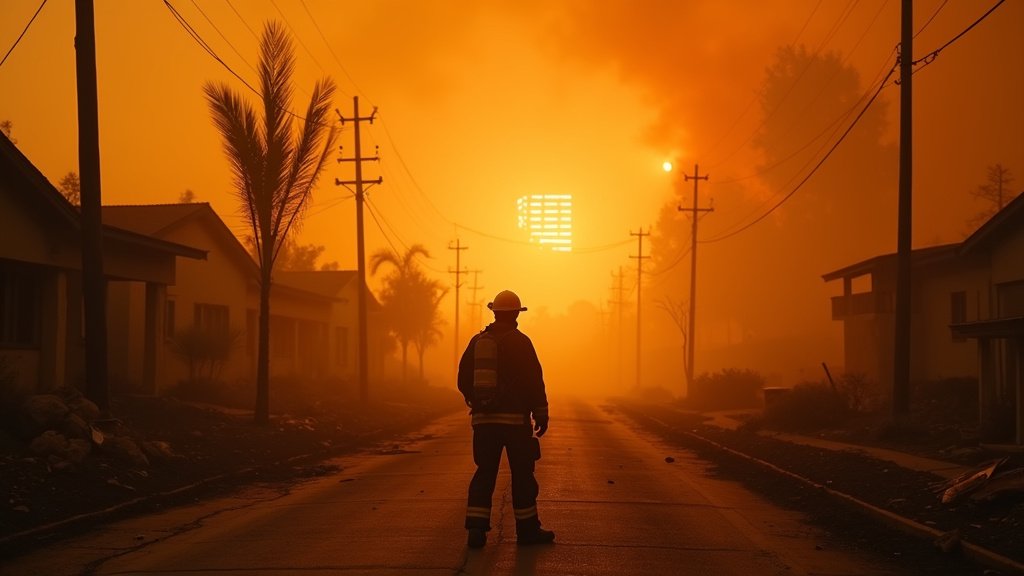
The intensifying California Insurance Crisis is characterized by an accelerating rate of insurance companies withdrawing coverage from wildfire-prone regions. Despite state-led initiatives aimed at stabilizing the market, data reveals a deepening challenge, with the California FAIR Plan, an insurer of last resort, reaching a record 646,000 policies by the end of September, nearly double its count from two years prior. This situation is a significant current news item, closely monitored nationally as other states face similar insurance market instability, underscoring the severity of the California Insurance Crisis.
The Accelerating Exodus Amidst the California Insurance Crisis
The trend of insurers scaling back or exiting California’s market has become increasingly pronounced in recent years, exacerbating the California Insurance Crisis. Major industry players like State Farm and Allstate have announced pauses or limitations on writing new homeowners policies. These decisions are driven by a confluence of factors, including rapidly growing catastrophe exposure due to wildfires, soaring construction costs exacerbated by inflation, and a challenging reinsurance market. Scientists indicate that climate change has made the West warmer and drier, leading to more frequent and destructive wildfires, a phenomenon impacting the entire coast. This has resulted in a growing number of homeowners facing homeowners insurance challenges, being unable to secure traditional insurance, forcing them to rely on the California FAIR Plan, a direct consequence of the California Insurance Crisis.
State’s Efforts to Address the California Insurance Crisis
California has implemented significant reforms, notably the “Sustainable Insurance Strategy,” spearheaded by Insurance Commissioner Ricardo Lara, in response to the California Insurance Crisis. This strategy permits insurers to use modern, forward-looking wildfire catastrophe models and to factor in state-specific reinsurance costs when filing for insurance rate increases. However, these concessions are contingent on insurers agreeing to expand their coverage in high wildfire-risk areas, effectively mandating them to write more policies in distressed neighborhoods. While these regulations aim to make the market more attractive and encourage insurers to stay, their ultimate effectiveness in resolving the California Insurance Crisis is still being evaluated. Some critics argue that existing regulations, such as Proposition 103, which governs rate approvals, can create lengthy delays, hindering insurers’ ability to adjust rates swiftly to match evolving risks. The state’s approach contrasts with other states that focus more broadly on cost-cutting measures for insurers or policyholders, further complicating the California Insurance Crisis.
Roots of the Crisis: Climate, Costs, and Complexity in the California Insurance Market
At the heart of California’s insurance dilemma, a core component of the California Insurance Crisis, lies the escalating threat of climate change risk-fueled wildfires. The state has experienced some of its most destructive fires in recent history, leading to billions in insured losses. This increased risk, coupled with a significant increase in homes built in fire-prone areas, has made insuring properties increasingly untenable for private carriers. Beyond climate change, the economic landscape plays a crucial role in the California Insurance Crisis. Skyrocketing rebuilding costs due to inflation for materials and labor mean that a single claim can now cost significantly more than it did previously. Furthermore, research suggests an economic phenomenon known as the “winner’s curse” may contribute to rising premiums, where insurers might overprice risk due to limited granular data or a fear of acquiring portfolios with higher-than-anticipated risks. The complexity of California’s rate-setting regulations, considered one of the most intricate in the US, also contributes to the problem, potentially preventing insurers from earning sufficient revenue to conduct business across the state, a significant factor in the ongoing California Insurance Crisis.
Homeowner Impact and National Ripples of the California Insurance Crisis
The consequences for California homeowners are severe, a direct result of the California Insurance Crisis. Many face limited insurance options, significantly higher premiums, or are left with bare-bones coverage from the California FAIR Plan, which was intended as a temporary safety net. This has led to a substantial “coverage shortfall,” the gap between total wildfire risk exposure and available financial protection. Lenders are increasingly hesitant to finance properties without adequate insurance, and homeowners may struggle to sell their homes, impacting the broader real estate market. This unfolding situation, marked by insurer withdrawal zones and the struggles of the California FAIR Plan, serves as a stark warning and is being watched closely nationwide, as similar trends of market instability and insurer retrenchment are emerging in other disaster-prone regions like Florida and Louisiana, highlighting the widespread implications of the California Insurance Crisis. The potential for financial contagion from localized insurance market collapses, much like the 2007-2009 Great Recession, poses a threat to broader financial stability, underscoring the national concern over the California Insurance Crisis.
Navigating Towards a Resilient Future Amidst the California Insurance Crisis
While the current landscape presents formidable challenges, efforts are underway to foster a more resilient insurance market and address the California Insurance Crisis. Reforms are being implemented with the aim of market stabilization, with some projections suggesting improvements could be seen by late 2025 or early 2026, offering a glimmer of hope amidst the persistent California Insurance Crisis. These ongoing investigations and analyses highlight the critical need for integrated solutions that include not only regulatory adjustments but also robust risk reduction strategies and urban planning to mitigate the impact of wildfires. Balancing consumer protection with the financial viability of insurers remains a key objective in navigating this complex and evolving crisis along the west coast, a crucial step in resolving the multifaceted California Insurance Crisis and its attendant state assistance struggles.