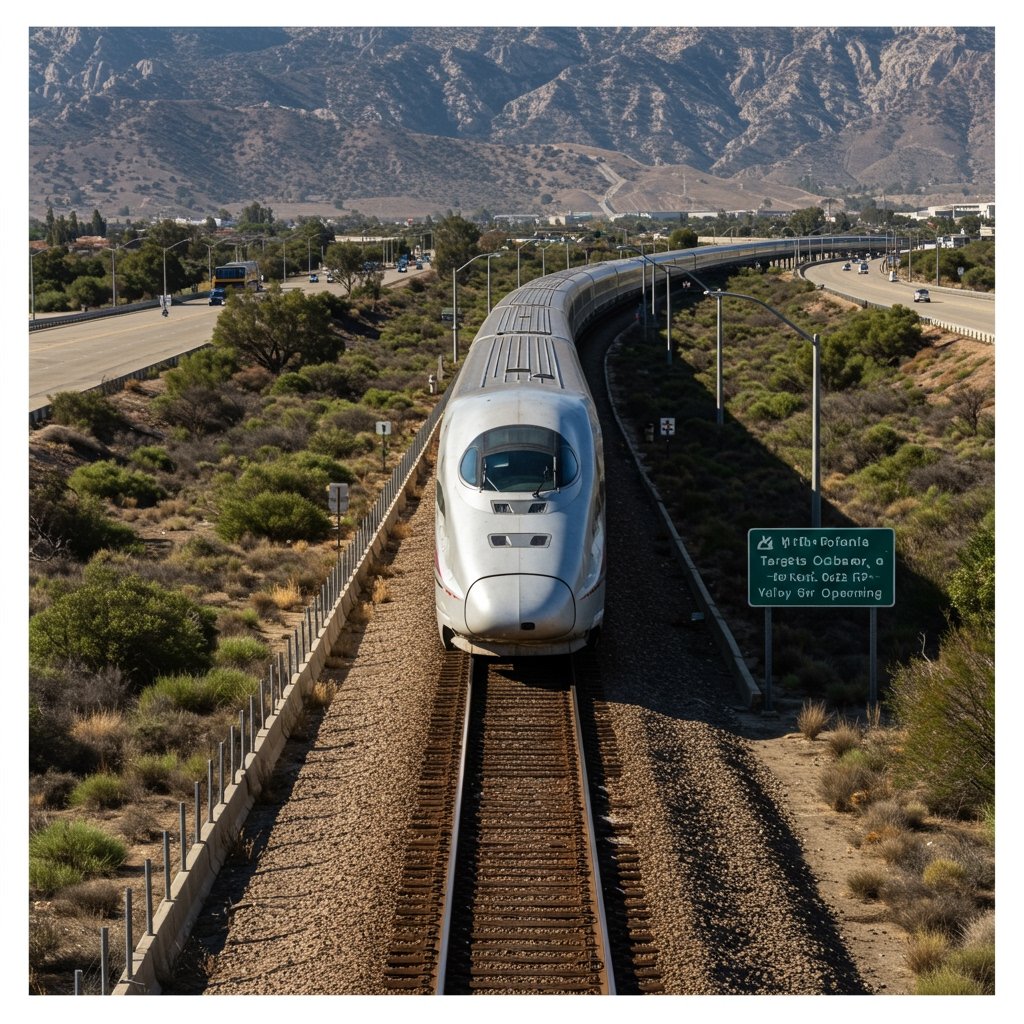
California High-Speed Rail Authority Sets Opening Date for Crucial Central Valley Segment
Sacramento, CA – In a significant announcement for the future of transportation in California, the California High-Speed Rail Authority (CAHSRA) declared on April 21, 2025, its revised target date for initiating operations on a pivotal segment of the state’s ambitious high-speed rail network. The Authority has set October 1, 2025, as the planned opening date for the first operational segment extending south from the Central Valley. This initial phase specifically targets the vital link between Bakersfield and Palmdale, a corridor deemed critical for eventually connecting the state’s agricultural heartland to the densely populated Los Angeles basin.
The announcement, delivered by Authority CEO Brian Kelly, provided clarity on the project’s evolving timeline, particularly concerning the southern portion of the planned system. Mr. Kelly stated that the newly established October 1, 2025, date reflects extensive analysis of revised construction timelines and logistical planning. The Authority’s strategic goal remains focused on achieving initial passenger service on this southern portion of the planned statewide network by year’s end. This initial segment represents a tangible step forward for a project that has navigated complex engineering, environmental, and financial challenges since its inception.
Project Context and Costs
The California High-Speed Rail project envisions a statewide network ultimately linking Sacramento and the San Francisco Bay Area to Los Angeles and San Diego, traversing the Central Valley. The segment connecting Bakersfield to Palmdale is geographically crucial. Bakersfield serves as a major population and transportation hub in the southern Central Valley, while Palmdale is a growing city in the Antelope Valley, strategically located on the northern fringes of the Greater Los Angeles area. Establishing this connection is a necessary precursor to extending service into the core of the Los Angeles basin, a significantly more complex and costly undertaking due to mountainous terrain and dense urban environments.
Alongside the timeline update, the Authority also provided a revised estimate for project costs specific to the Central Valley section alone. This comprehensive section, encompassing the current active construction zones and the link extending south towards Palmdale, is now estimated to cost approximately $38 billion. This figure represents a substantial revision from earlier projections and underscores the escalating expenses associated with constructing complex infrastructure projects in the current economic and regulatory environment. The cost increase has been attributed to a confluence of factors, including inflation, supply chain disruptions, design changes, and the inherent complexities of large-scale civil engineering work. The Authority continues to seek federal and state funding to support the project as costs evolve.
Significance of the Bakersfield-Palmdale Segment
The Bakersfield-Palmdale segment, while not yet reaching the core of either major metropolitan area (Bay Area or Los Angeles), is strategically vital. It creates a functional link between the Central Valley spine – where significant construction progress has been made – and Southern California. Connecting these two points is essential for future integration into the broader network. The route traverses challenging topography, including the ascent towards the Tehachapi Mountains, requiring substantial engineering feats such as tunnels and viaducts. Its completion allows for operational testing and eventual revenue service, providing a proof of concept and generating initial ridership, even if limited to this specific corridor initially.
Current Status and Testing
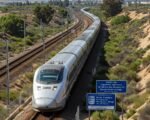
The Authority’s announcement on April 21, 2025, also detailed the current state of progress, specifically highlighting that testing phases are currently underway on completed track sections near Palmdale. This testing is a critical step before passenger operations can begin. It involves running specialized trains at varying speeds to check track integrity, signal systems, power systems, and overall operational readiness. Rigorous safety protocols are applied during this phase to ensure that every component of the railway infrastructure meets stringent high-speed operational standards. The proximity of the testing to Palmdale indicates that construction on the southern end of the segment is reaching a stage where dynamic assessments of the completed physical plant are possible.
Challenges and Progress
The California High-Speed Rail project has faced persistent scrutiny regarding its budget, timeline, and management. Critics have pointed to repeated cost increases and delays since the project was first approved by voters in 2008. However, proponents argue that such large-scale infrastructure projects inherently involve unforeseen challenges and that the long-term benefits—including reduced travel times, decreased reliance on fossil fuels, and economic development—justify the investment. The establishment of a firm opening date for a key operational segment represents a tangible benchmark of progress amidst the ongoing complexities.
Looking Ahead
The October 1, 2025, target date for the Bakersfield-Palmdale link is presented as the beginning of phased operations. Authority CEO Brian Kelly’s mention of aiming for initial passenger service on the southern portion of the planned statewide network by year’s end suggests that while the link opens in October, the ramp-up to consistent passenger service might extend into the later months of 2025. The next major milestones involve completing the connection from Palmdale into Los Angeles Union Station, a segment that includes the construction of complex tunnels and integration with existing rail infrastructure in the highly urbanized Southern California environment. Simultaneously, planning and environmental review continue for the northern segments connecting the Central Valley to the Bay Area and Sacramento. The successful opening and operation of the Bakersfield-Palmdale line are seen as crucial steps in building momentum and public confidence for the completion of the larger statewide system.