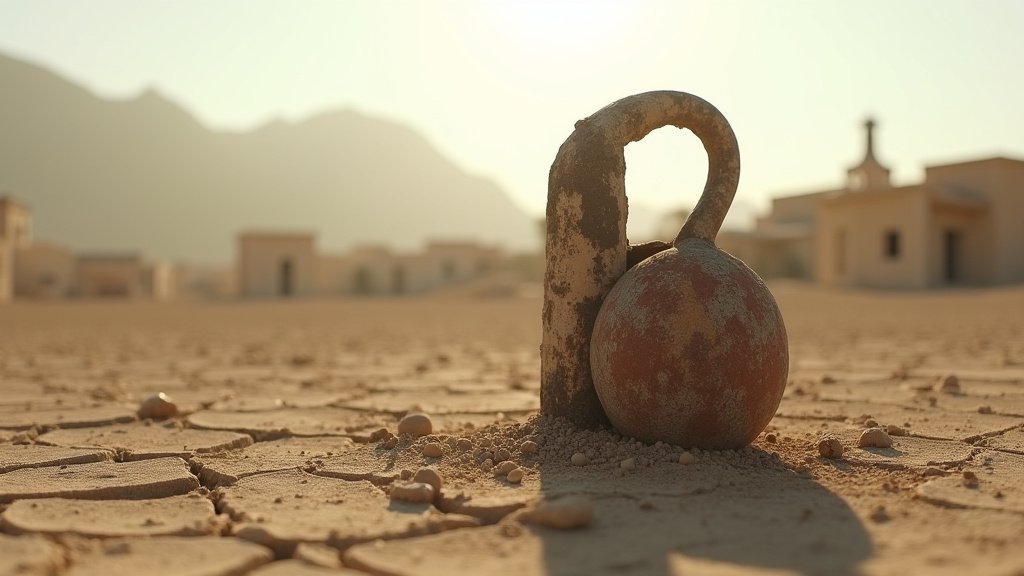
In the arid basin of the Salton Sea, a decade-long experiment in bohemian rebellion has reached a critical juncture. The Bombay Beach Biennale, an event that began as an intimate, invite-only gathering, has blossomed into a viral phenomenon that defies the conventional boundaries of art festivals. As the event celebrates its 10th anniversary, the organizers and the community are grappling with a paradox: how does a movement built on anti-establishment values and radical self-expression maintain its integrity while managing the logistical pressures of thousands of visitors in a region defined by its isolation and environmental fragility?
- The 10-Year Milestone: A decade has passed since the festival’s inception by Tao Ruspoli, Lily Johnson White, and Stefan Ashkenazy, transforming a forgotten corner of the California desert into a hub of avant-garde art.
- The Safety Catalyst: Recent safety incidents, including a major vehicular accident, have forced the festival to introduce private security for the first time, sparking internal debate about the nature of the event.
- The DIY Dilemma: The festival’s core identity—a raw, “weird dream” of artistic freedom—is being tested by the realities of scaling operations in a town with almost no infrastructure.
- Environmental Context: The Salton Sea, a landscape of decay and ecological collapse, provides a unique, apocalyptic canvas that remains integral to the festival’s aesthetic and philosophical appeal.
The Decade-Long Desert Odyssey
For ten years, the Bombay Beach Biennale has stood as a defiant counterpoint to the commercialization of modern art festivals. Unlike the polished corporate machines that dominate the music and art circuit, the Biennale has thrived on a commitment to the ephemeral and the uncurated. It is a place where the landscape—marked by the slow, humid decay of the Salton Sea—does not merely host the art; it dictates it. The festival has always been more of an intervention than a fair, with installations often left to rot, rust, or be reclaimed by the harsh desert elements.
From Ruin to Rebirth
When Tao Ruspoli and his co-founders first convened in Bombay Beach, they were not looking to build a brand. They were looking for a canvas that felt abandoned by time. Bombay Beach, a tiny, unincorporated community 235 feet below sea level, offered the perfect site. Over the past decade, the festival has turned the town into a living, breathing gallery of the surreal.
However, the evolution from a secret gathering to a destination has been jarring. In its early years, the Biennale operated under the radar, relying on word-of-mouth and a shared sense of bohemian purpose. Today, the influx of visitors—attracted by the “weird dream” aesthetic and viral social media coverage—has placed an unprecedented strain on the town. The infrastructure, which was never designed to support thousands of people, is struggling to cope with the surge of traffic, waste, and, most critically, human risk.
The Cost of Cool: When DIY Meets Reality
The recent introduction of private security measures serves as a somber bellwether for the festival’s trajectory. The move was prompted by an alarming series of incidents, including a vehicular accident where a visitor was severely injured while riding on the roof of a moving car. Such events are antithetical to the spirit of the Biennale, which has prided itself on being a space for safe, radical expression.
This shift raises a fundamental question: at what point does the imposition of order destroy the very spirit of chaos that makes the Biennale compelling? For the organizers, the challenge is to implement necessary safety protocols—without which the festival cannot legally or ethically exist—while preventing the event from becoming a sanitized, gated experience. The tension is palpable. Longtime attendees worry that the arrival of security, fencing, and stricter rules signals the beginning of the end for the festival’s “Wild West” ethos.
The Future of the Apocalyptic Canvas
As the festival moves beyond its 10th year, it stands at a crossroad. One path leads toward increased formalization, regulation, and potential corporatization to ensure longevity and safety. The other leads to a retreat—a scaling back that would alienate the newer, broader audience that has grown to love the Biennale but might fundamentally preserve its DIY DNA.
Critics and supporters alike are watching closely. The Bombay Beach Biennale is not just an art event; it is a commentary on the fragility of systems, both ecological and social. The Salton Sea, with its history of irrigation disasters and toxic dust, is the perfect backdrop for these questions. If the festival can survive its own popularity, it will likely be because it continues to embrace the uncomfortable, the decaying, and the dreamlike, rather than trying to polish away the grit that gives it life.
FAQ: People Also Ask
Q: What is the primary purpose of the Bombay Beach Biennale?
A: The Biennale is an arts festival designed to transform the neglected town of Bombay Beach on the Salton Sea into an open-air gallery, using the landscape’s decaying, apocalyptic aesthetic as a medium for artistic intervention and expression.
Q: Who founded the Bombay Beach Biennale?
A: The festival was established in 2016 by Tao Ruspoli, Lily Johnson White, and Stefan Ashkenazy, who aimed to create a non-commercial, anti-establishment space for artists.
Q: Why is there controversy surrounding the festival’s popularity?
A: The rapid growth in attendance has strained the town’s minimal infrastructure and led to safety concerns. This has necessitated the introduction of private security and regulations, which some argue clashes with the festival’s original DIY, anti-establishment philosophy.
Q: Is the Bombay Beach Biennale still an anti-establishment event?
A: The organizers maintain that the core spirit of the event remains anti-establishment, though they acknowledge that the logistics of managing a large, popular event in a remote area require concessions that the original, intimate version of the festival did not.