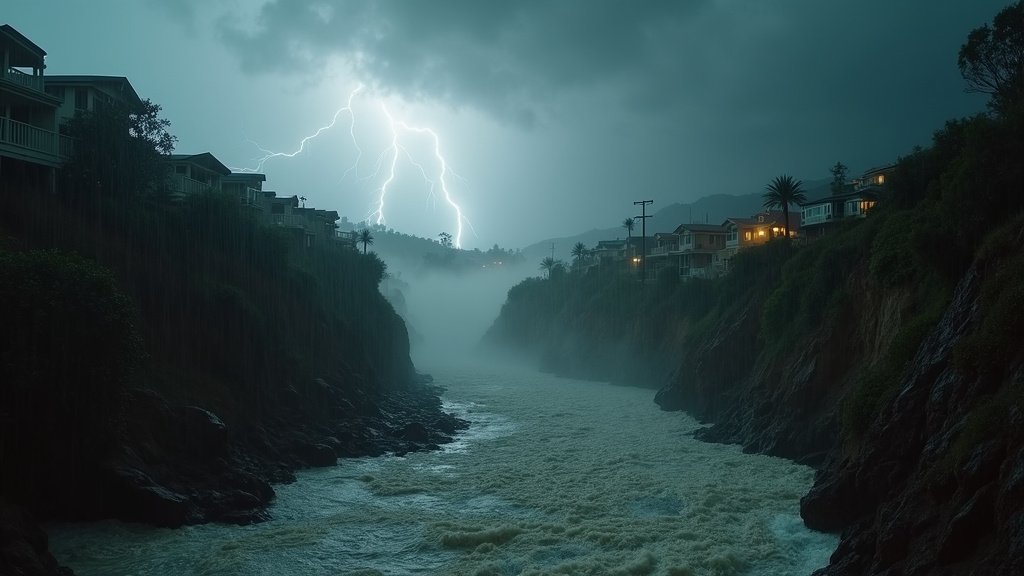
California Braces for Atmospheric River: Evacuation Warnings Issued Amid Heavy Rainfall and Landslide Threats
Southern California, specifically Los Angeles, Santa Barbara, and Ventura counties, faced a significant threat over the weekend of November 15-16, 2025, as a powerful Atmospheric River California storm brought torrential rain, high winds, and the grave danger of flash floods and landslide warnings. This formidable weather event followed a series of disruptive storms that had already saturated the region, intensifying concerns about potential disasters impacting the Atmospheric River California.
The Approaching Deluge: Storm Details and Forecast for Atmospheric River California
The atmospheric river, described as a concentrated stream of moisture, began impacting the West Coast, with its most intense phase hitting Southern California on Saturday, November 15th. Forecasters from the National Weather Service (NWS) warned of prolonged periods of heavy rainfall, with some areas expected to receive 12 to 24 hours of nonstop rain. Rainfall rates were predicted to reach as high as an inch per hour in coastal regions, prompting flood watches for millions across the Southland, including Los Angeles, Ventura, and Santa Barbara counties. This was a significant Atmospheric River California event.
If the forecast held true, downtown Los Angeles could have experienced its wettest November in four decades, potentially surpassing records set in 1985 and approaching levels not seen since the 1980s. Some projections indicated that Los Angeles might receive between 3.5 and 5 inches of rain by early Monday, a significant portion of its annual average rainfall, within just a few days. Higher totals were anticipated in mountainous and hilly areas, with predictions of 4 to 8 inches in some locations, a common occurrence with Atmospheric River California systems.
Beyond the deluge, the storm system carried the risk of severe weather, including localized damaging winds and even the possibility of a brief tornado. Snow was also expected in higher elevations, with up to a foot forecast for the Sierra Nevada, typical for an Atmospheric River California event.
Evacuation Warnings and Landslide Risks During Atmospheric River California Storms
A primary concern for officials was the increased risk of mudslides and debris flows, particularly in areas recently ravaged by wildfires. Evacuation warnings were issued for communities situated near burn scars, including those affected by the January 2025 Palisades, Eaton, Kenneth, Sunset, and Hurst fires. Mandatory evacuation orders were enacted for specific high-risk properties within these zones, urging residents to leave by Sunday morning. The potential for California flooding was high.
Los Angeles Mayor Karen Bass emphasized the gravity of the situation, stating, “Due to the potential for debris flows, an Evacuation Warning remains in effect within and around all recent burn scar areas, and select vulnerable properties remain under Evacuation Orders”. These debris flows, essentially fast-moving landslides, can gain momentum as rainfall washes mud and debris down hillsides, posing a significant threat to homes and vehicles. Officials cautioned that these flows could strike with punishing speed, potentially reaching up to 35 mph, highlighting the danger of Atmospheric River California.
Impacts on Infrastructure and Daily Life During the Atmospheric River California Event
The anticipated heavy rainfall posed a substantial threat to infrastructure. Forecasters warned that roads and highways were likely to experience flooding, potentially blocking thoroughfares and causing damage. Officials urged residents to avoid nonessential travel and stressed the danger of driving through flooded roadways, noting that most flood-related fatalities occur in vehicles. Road closures were also implemented, such as the closure of Topanga Canyon Boulevard due to the high potential for debris flows and the threat of California flooding.
Beyond traffic disruptions, the storm also brought concerns about power outages and the safety of waterways. Creeks and rivers were expected to experience heavy flows, with warnings issued for anyone in or near these channels. While the rains were vital for replenishing reservoirs and alleviating drought conditions in the West, the immediate impact was one of significant hazard, including heavy rainfall Los Angeles residents were warned about.
Official Response and Preparedness for Atmospheric River California Storms
In anticipation of the storm, government agencies and emergency services were on high alert. The National Weather Service issued flood watches and warnings, providing crucial updates and guidance to the public. Local authorities, like the Los Angeles Fire Department and Ventura County Sheriff’s Office, actively communicated evacuation orders and advisories, urging residents to prepare emergency kits, secure their properties, and check on neighbors. Storm warnings were prevalent.
By Saturday evening, some evacuation warnings began to be lifted, and flash flood warnings started to expire as the storm’s intensity shifted. However, the potential for lingering flooding, mudslides, and rockslides remained a concern across Southern California weather patterns. The storm served as a stark reminder of the power of atmospheric rivers and the ongoing need for preparedness along the West Coast, especially concerning an Atmospheric River California.
The events of November 15-16, 2025, underscore the dynamic and sometimes destructive nature of weather systems that frequently affect the region, impacting communities and highlighting the importance of timely warnings and robust emergency response to an Atmospheric River California.