Wildfires Ignite Across California on July 8, 2026
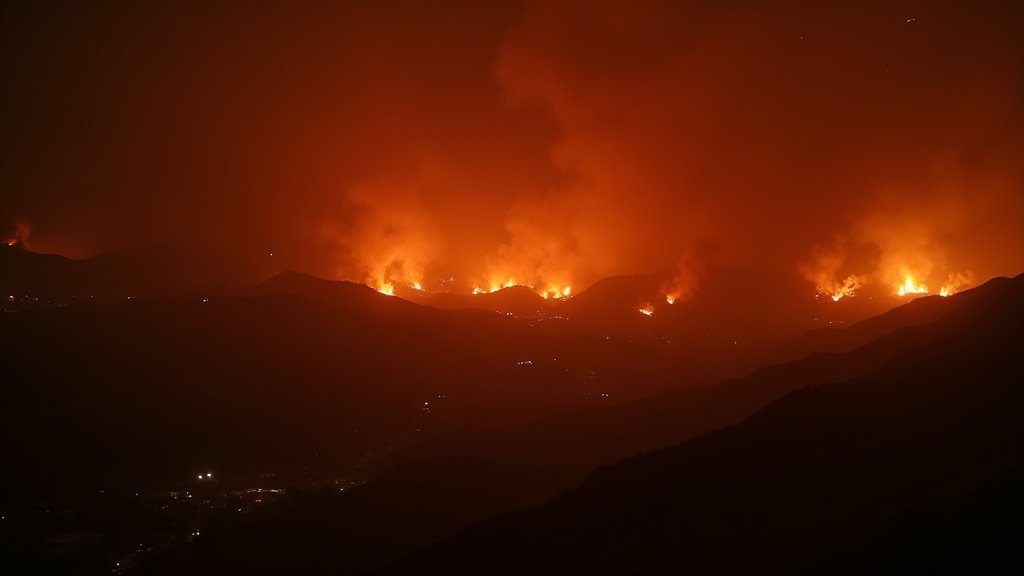
On July 8, 2026, a series of new wildfires broke out across California, demanding immediate attention from emergency services. The blazes, which began in the early morning hours, have been reported in Butte, Los Angeles, and Humboldt Counties, highlighting the ongoing threat of wildfire activity in the state. As of the latest reports, containment and cause details for several of these incidents remain undetermined, underscoring the dynamic and evolving nature of these situations.
Key Highlights
- Butte County: The Canal Fire started at 1:58 a.m. on private land, with its containment and cause unknown.
- Los Angeles County: Two separate wildfires were reported: one at 1:56 a.m. on private land and another at 3:37 a.m. on federal land managed by the U.S. Department of Defense. Both have undetermined containment and cause.
- Humboldt County: The Mp 16.97 Fire began at 1:51 a.m. on federal land managed by the Bureau of Indian Affairs, with no immediate status or origin details available.
- Statewide Threat: These incidents underscore the persistent wildfire risk across California, particularly during warmer months.
Early Morning Inferno: Multiple Blazes Erupt Across Golden State
The state of California faced a dramatic start to July 8, 2026, as multiple new wildfires erupted in quick succession. Firefighting crews were immediately mobilized to combat these rapidly developing incidents across different regions of the state. The early morning hours saw fires ignite in several key counties, each presenting unique challenges and demanding swift response.
Butte County’s Canal Fire
In Butte County, the Canal Fire was reported at 1:58 a.m. The fire ignited on private land, and as of the initial reports, both the extent of its containment and its cause remained undetermined. The proximity to private property raises concerns about potential impacts on residents and infrastructure in the area. Information regarding the fire’s progression and any evacuation orders was still being assessed in the immediate aftermath of its discovery.
Los Angeles County’s Twin Fires
Los Angeles County became the epicenter of significant fire activity with two separate wildfire incidents reported on the same morning. The first, a wildfire designated LAC-237797, was reported at 1:56 a.m. This blaze occurred on private land, and like many of the day’s incidents, its containment status and origin were unknown at the time of reporting. This fire underscores the challenge of managing ignitions in varied terrains across the county.
Later in the morning, at 3:37 a.m., a second wildfire, identified as LAC-237845, was reported in Los Angeles County. This incident occurred on federal land managed by the U.S. Department of Defense. While the specific location and land management agency were identified, details regarding containment progress and the fire’s cause were also undetermined. The presence of fires on federal land managed by the Department of Defense indicates a complex jurisdictional and response scenario.
Humboldt County’s Mp 16.97 Fire
Further north, in Humboldt County, the Mp 16.97 Fire was reported at 1:51 a.m. This fire ignited on federal land under the management of the Bureau of Indian Affairs. No immediate details regarding the fire’s containment, cause, or current status were made available in the initial reports, highlighting the need for ongoing information gathering from this remote location.
Broader Context and Fire Preparedness
These multiple ignitions on a single morning serve as a stark reminder of California’s persistent vulnerability to wildfires. The National Interagency Fire Center (NIFC) reported on July 7, 2026, that nationwide, 177 new fires were reported, with 36 large fires actively being suppressed across the country. Extreme fire behavior and evacuations were noted in multiple geographic areas. So far in 2026, the U.S. has experienced 37,535 fires burning over 3.3 million acres. The conditions that contribute to wildfire spread, including dry vegetation and fluctuating weather patterns, remain a critical concern for state and federal agencies. The U.S. Department of Defense’s involvement in managing land in Los Angeles County points to the multifaceted nature of land management and wildfire response, often involving inter-agency cooperation.
FAQ: People Also Ask
Q1: What were the primary locations of the new wildfires reported on July 8, 2026?
A1: The new wildfires were reported in Butte County (Canal Fire), Los Angeles County (two separate incidents), and Humboldt County (Mp 16.97 Fire).
Q2: What is the containment status and cause of these new fires?
A2: For the Canal Fire in Butte County, and both fires in Los Angeles County, the containment and cause remain undetermined. Details for the Mp 16.97 Fire in Humboldt County were also not immediately available.
Q3: Which agencies are involved in managing the lands where these fires occurred?
A3: Fires occurred on private land, federal land managed by the U.S. Department of Defense (Los Angeles County), and federal land managed by the Bureau of Indian Affairs (Humboldt County).
Q4: How does this compare to the national wildfire situation?
A4: As of July 7, 2026, the nation was experiencing significant wildfire activity, with 177 new fires reported nationwide and 36 large fires active, indicating a widespread increase in fire danger across the U.S..