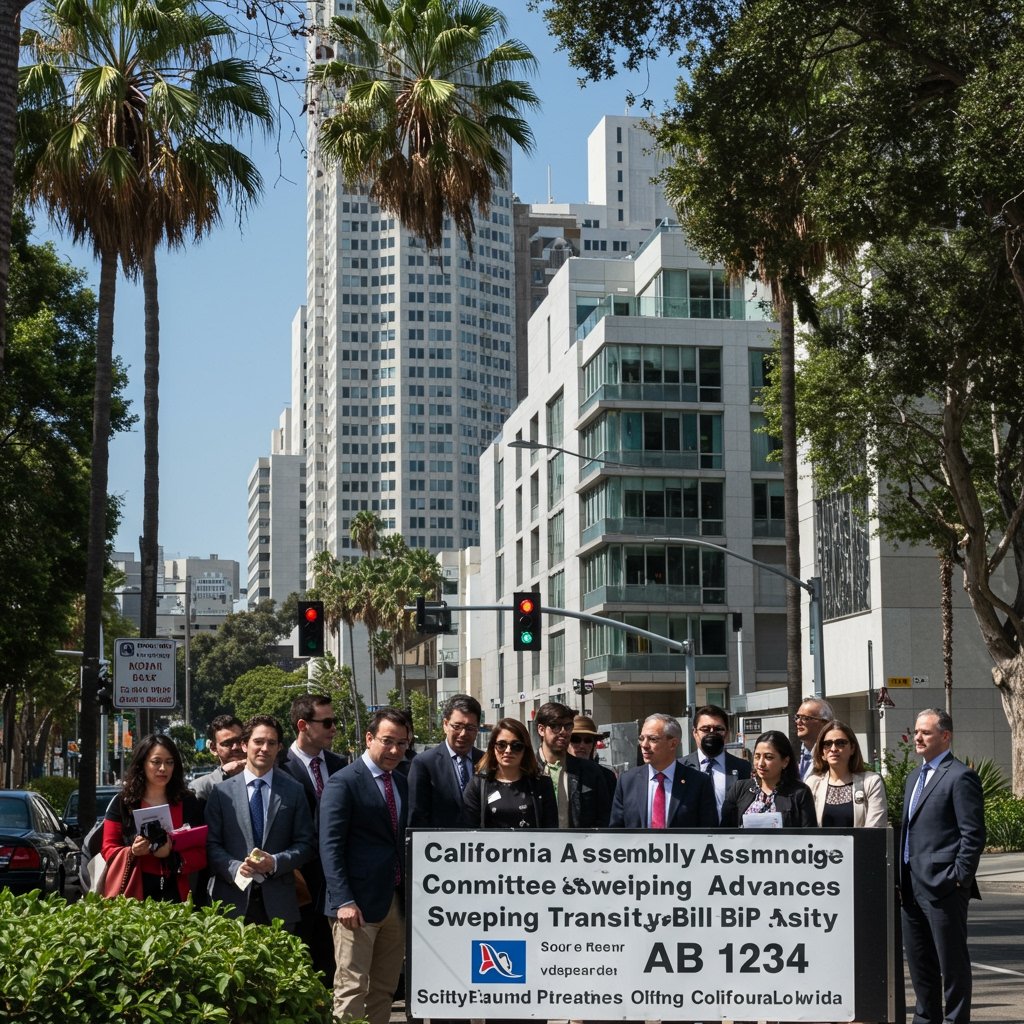
California Assembly Committee Advances Sweeping Transit-Density Bill Amid Fierce Debate
Sacramento, CA — In a move signaling a potential shift in the state’s approach to addressing its persistent housing crisis, the California State Assembly’s Housing Committee today advanced controversial Assembly Bill 1234 (AB 1234). The legislation, which proposes significant increases in residential density particularly around key public transit hubs across California, cleared the committee after a lengthy and often passionate debate, securing passage with a 7-4 vote.
AB 1234 represents the latest in a series of legislative attempts at the state level to override or significantly modify local zoning laws to facilitate the construction of more housing. Its core premise is that concentrating housing development near public transportation makes communities more sustainable, reduces reliance on automobiles, and leverages existing infrastructure investments. By allowing for higher density – potentially permitting multi-story apartment buildings where previously only single-family homes stood – within specified distances of train stations, bus rapid transit stops, and other transit centers, proponents argue the bill would unlock vast potential for new housing supply in areas already served by public services.
The Proponents’ Case: Tackling the Housing Crisis
Supporters of AB 1234 frame the bill as an essential, albeit necessary, measure to combat what they describe as California’s critical, decades-long housing shortage. They point to soaring rents and home prices across the state, which have made housing increasingly unaffordable for a vast swaths of the population, particularly low- and middle-income families. Proponents argue that restrictive local zoning, often characterized by a predominance of single-family zones, has artificially limited housing supply in desirable areas, driving up costs and contributing to sprawl and long commutes.
The bill, they contend, would accelerate the creation of much-needed housing units by streamlining the approval process and establishing minimum density standards in strategic, transit-rich locations. This approach, often referred to as Transit-Oriented Development (TOD), is lauded by housing advocates and environmental groups for its potential to reduce greenhouse gas emissions by decreasing vehicle miles traveled. They argue that relying solely on local jurisdictions, many of whom have historically been resistant to approving denser housing projects due to neighborhood opposition, has demonstrably failed to produce housing at the scale and pace required to meet demand.
Opponents Raise Alarms Over Local Control and Infrastructure Strain
Despite the urgent calls for action on housing, AB 1234 faces significant opposition, primarily from local government officials and residents’ groups. A central point of contention is the bill’s perceived erosion of local land-use control. Critics argue that decisions about the character and density of neighborhoods should remain firmly in the hands of local elected officials and their constituents, who understand the unique needs and context of their communities. They view state mandates like AB 1234 as an unwelcome intrusion that bypasses established local planning processes and public input.
Beyond the philosophical debate over governance, opponents voice strong objections regarding the potential strain on existing infrastructure. Increasing residential density around transit hubs, they argue, will place immense pressure on already stretched local resources, including water supply, sewage systems, roads, parks, schools, and emergency services. Without guaranteed state funding to upgrade this infrastructure commensurate with the projected population growth, communities could face significant challenges, leading to overcrowding, traffic congestion, and diminished quality of life.
Some opponents also raise concerns about potential displacement, fearing that rapid development and rising property values in areas targeted by the bill could price out existing residents, particularly renters and vulnerable populations, altering the social fabric of neighborhoods.
Committee Deliberation and Vote
The hearing before the Assembly Housing Committee saw extensive testimony from both proponents and opponents of AB 1234. Advocates reiterated the urgency of the housing crisis and the necessity of state intervention, presenting data on housing production shortfalls. Opponents countered with arguments about the importance of community character, the need for local control, and the practical challenges of accommodating rapid growth without adequate infrastructure investment.
Committee members wrestled with these competing interests. While acknowledging the severity of the housing shortage, some expressed reservations about the extent to which the bill preempts local authority and the potential unfunded mandates it might place on cities and counties. The 7-4 vote reflects this division within the committee, indicating that while there was sufficient support to move the bill forward, concerns remain significant among a notable portion of the legislative body.
Next Steps and Uncertain Future
Having successfully navigated the Assembly Housing Committee, AB 1234 is now set to be considered by the Assembly Appropriations Committee. This committee’s role is to evaluate the fiscal impact of proposed legislation on the state budget and local governments. Given the potential costs associated with infrastructure demands and other impacts of increased density, the bill is expected to face intense scrutiny in this next phase.
The passage through the Housing Committee is a critical milestone for AB 1234, but its future remains uncertain. The debates regarding its potential impact on communities, the balance between state mandates and local control, and the practical challenges of implementation are far from settled. The bill may undergo further amendments as it progresses through the legislative process, and it faces additional hurdles in subsequent policy committees and on the Assembly and Senate floors before it could reach the Governor’s desk.
The advancement of AB 1234 highlights the ongoing tension in California between the state’s ambitious goals for housing production and the desire of local jurisdictions to retain control over their development patterns. As the bill moves forward, the vigorous debate surrounding its provisions is expected to continue, shaping its final form and determining its ultimate fate in the complex landscape of California housing policy.